
Customer Feedback Success Stories for Small Businesses
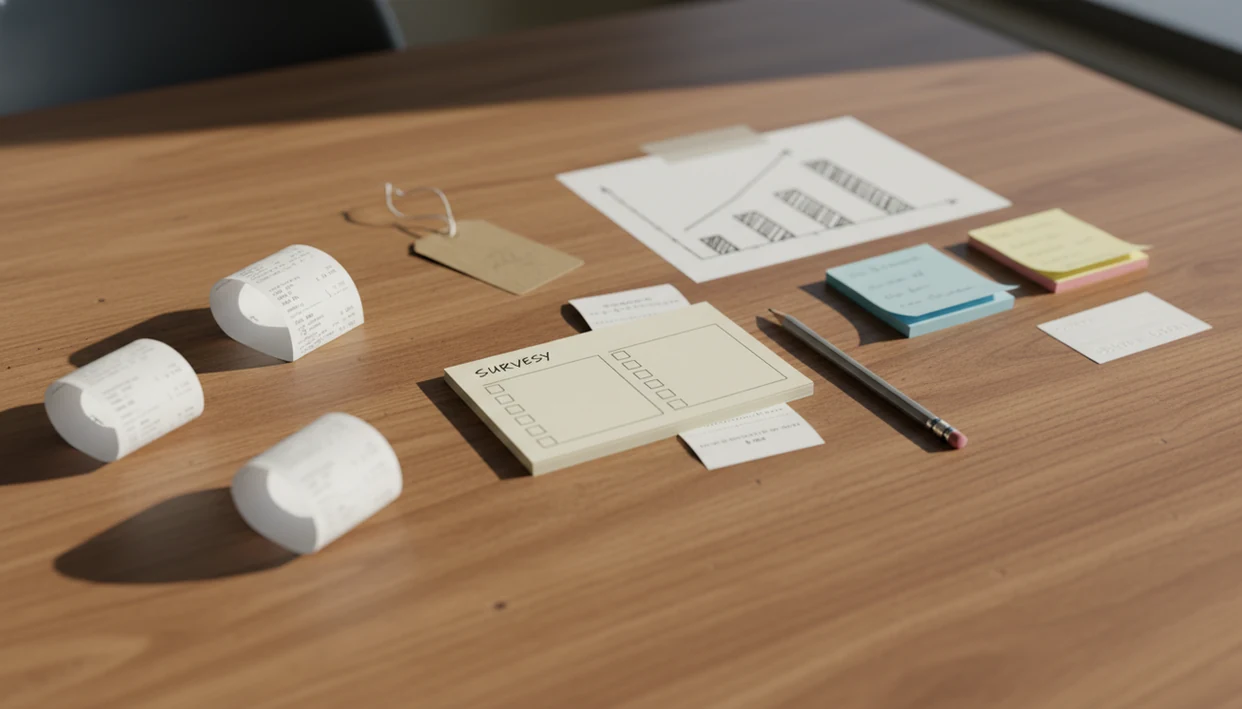
Customer feedback success stories show that small businesses get better results when they collect structured post-purchase surveys, spot repeated patterns, and make one clear operational change at a time. The strongest examples connect feedback to measurable outcomes such as higher NPS, more repeat purchases, fewer complaints, or better online reviews.
> Customer Feedback Surveys is a customer feedback survey app that collects post-purchase surveys, NPS scores, and review follow-ups for small businesses.
Editorial note: the small-business examples below are illustrative composites built from common customer feedback patterns, not independently audited client case studies. Use the workflow, metrics, and proof limits as a model for testing changes in your own business.
- The most credible customer survey success examples start with a repeatable survey workflow, not random comments.
- Small businesses usually win by fixing practical issues such as wait times, unclear product descriptions, missed follow-ups, or inconsistent service.
- Feedback program case studies should show the problem, the survey signal, the action taken, and the before-and-after metric.
At-a-Glance Customer Feedback Success Stories
Customer feedback success stories are practical before-and-after examples from small businesses using surveys, NPS, and review follow-ups to fix one part of the customer experience. The useful ones are plain: what customers said, what changed, and what improved.
| Business type | Feedback signal | Action taken | Result measured |
|---|---|---|---|
| Retail shop | Low satisfaction on product clarity | Updated product pages and printed care cards | Fewer complaints, NPS lift |
| Restaurant | Repeated wait-time comments | Adjusted prep schedule and pickup flow | Better review rating, more reviews |
| Salon or spa | Happy visits but weak rebooking | Added aftercare and rebooking reminders | Higher satisfaction, more repeat appointments |
A receipt link printed below the total often tells more than a casual “How was everything?” at the counter.
Good customer feedback survey apps for small businesses deliver post-purchase surveys, NPS scores, and actionable customer insights, not a thick research program nobody has time to read.
Customer Feedback Success Story Workflow for Small Businesses
A customer feedback success story workflow collects feedback after a transaction, groups responses by theme, identifies repeated friction, changes one process, and measures the same signal again. The value comes from pattern recognition and follow-through, not from piling up survey responses.
How customer feedback success stories work: rating questions show the level of satisfaction, NPS shows referral intent, and open-text comments explain the reason behind the score. In practical terms, the score points to the smoke; the comment usually shows the fire. An owner checking yesterday’s survey comments before opening the register can spot a repeated pickup complaint faster than a monthly sales report will.
McKinsey has reported that companies strong in customer experience and feedback-driven improvement grow revenues 4–8% above their market. (Source: McKinsey, "Customer experience: creating value through transforming customer journeys," https://www.mckinsey.com/capabilities/growth-marketing-and-sales/our-insights/customer-experience-creating-value-through-transforming-customer-journeys.) For small businesses, structured weekly review is often easier than quarterly analysis because the issue is still fresh.
Customer Survey Success Example: Boutique Retailer Fixes Product Confusion
How can a retailer use customer surveys to fix product confusion? A small shop can pair a post-purchase rating with NPS and one comment field, then look for repeated confusion in the words customers use.
At Marigold & Finch, a boutique gift shop, customers liked the products but kept mentioning unclear candle sizes and care instructions. The shop sent an automatic post-purchase email with a 1–10 satisfaction question, an NPS-style recommendation question, and one open comment box. After three weeks, “smaller than expected” appeared again and again.
The fix was not dramatic. Staff added size photos beside common objects, printed care cards for fragile items, and changed pickup messages to include bag location and timing. Product-related complaints fell from about 18 per month to 7, and NPS moved from 32 to 48 over two months. Tools like Customer Feedback Surveys, SurveyMonkey, and Google Forms can support this kind of simple workflow when the questions stay short.
Customer Feedback Success Story: Independent Restaurant Improves Review Ratings
How can a restaurant turn feedback into better review ratings? The strongest restaurant examples wait for a repeated survey pattern before changing staffing, prep, or pickup flow.
At South Fork Noodle House, the owner first noticed one angry takeout comment and ignored the urge to rewrite the whole process. Then seven surveys in ten days mentioned lukewarm noodles after weekend delivery. A line cook had already been calling out delayed entrees, but the survey comments showed the customer-side result.
The restaurant moved one prep person earlier on Friday and Saturday nights, added a final bag check, and changed pickup staging by order time. After low scores, the manager replied privately before sending any review follow-up. Harvard Business School research found that each one-star Yelp increase is linked with a 5–9% revenue increase for independent restaurants. (Source: Michael Luca, Harvard Business School, "Reviews, Reputation, and Revenue: The Case of Yelp.com," https://www.hbs.edu/ris/Publication%20Files/12-016.pdf.) A careful Google review follow-ups process can help happy customers share their experience without turning feedback into review gating.
Feedback Program Case Study: Local Salon Reduces Missed Follow-Ups
How can a salon use feedback to improve rebooking? Appointment-based businesses often find that clients are satisfied in person but unclear about aftercare, timing, or the next visit.
At Willow Room Studio, clients smiled at checkout and said everything was fine. Later, several gave a 6 out of 10 and wrote that they did not know when to rebook color touch-ups. The front desk was rebooking before checkout some days, but not during busy afternoons when the towel warmer was humming near reception and phones kept ringing.
The salon added an automated thank-you survey, a same-day aftercare message, and a seven-day rebooking reminder. Low scores went to the owner for private follow-up. Microsoft’s customer service research found that 81% of U.S. adults said positive service experiences increase the likelihood of another purchase. After 60 days, Willow Room saw more repeat appointments and fewer “I meant to call” comments. The recovery step matters more than the template.
Five Patterns in Strong Customer Survey Success Examples
Strong customer survey success examples share five repeatable patterns. Negative feedback often creates the clearest story because it points to a fixable issue, not just a compliment to celebrate.
- Structured survey trigger: The survey goes out after purchase, visit, delivery, or appointment completion.
- Repeated feedback theme: The business waits for a pattern, such as unclear pickup details or slow service.
- Specific owner: One person owns the follow-up, so the issue does not sit in an inbox.
- Simple operational change: The fix is usually a script, reminder, schedule change, or clearer message.
- Remeasurement: The same score or complaint theme is tracked after the change.
NPS alone is incomplete without customer comments and operating context. Medallia Institute research has associated a 7-point NPS increase with about a 1% revenue increase, but the comment explains what to fix.
5-Step Customer Feedback Success Story Workflow
How to use customer feedback success stories in your own business: turn the example into a small test, then measure whether the same problem improves. A weekly spreadsheet tab with NPS scores, customer quotes, and one assigned follow-up is enough to start.
- Set one survey trigger after purchase, visit, appointment, delivery, or service completion.
- Ask one score question, one NPS-style question, and one open-text question.
- Review responses weekly and group comments by theme, not by mood.
- Fix one repeated issue and assign one owner who can change the process.
- Remeasure the same metric for at least 30 to 60 days before calling it a success story.
Start small.
Ready-made customer feedback survey templates can help teams avoid asking five questions when three would do. For a restaurant or shop, fewer questions usually mean a cleaner response window and less staff follow-up.
Metrics That Make Feedback Program Case Studies Credible
Credible feedback program case studies track at least one experience metric and one business metric. The same metric should be compared before and after the change over a consistent time period.
| Metric type | Examples | Why it matters |
|---|---|---|
| Experience metric | NPS, CSAT, complaint theme, response time | Shows whether customers felt the change |
| Reputation metric | Review rating, review count, review text | Shows whether public perception shifted |
| Business metric | Repeat purchase, rebooking, refund rate, retention | Shows whether behavior changed |
Avoid claims like “customers loved it” unless comments or numbers support them. A Journal of Service Research study in retail banking found that a 10-point satisfaction increase was associated with a 3–4% increase in customer retention. Use this as category-level context, not a direct forecast for a shop, restaurant, or salon; the study setting was retail banking, so the exact lift may not transfer. Source: https://journals.sagepub.com/home/jsr.
For small businesses, a repeat purchase rate paired with a complaint theme is often more believable than a single high NPS score because it connects sentiment to behavior.
5 Proof Limits in Customer Feedback Success Stories
A customer feedback success story is directional evidence, not a controlled experiment. It can show a useful pattern to test, but it cannot prove that the same change will create the same result everywhere.
Seasonality may lift sales. A promotion can raise repeat orders. Staffing changes, local competition, weather, and review platform updates can all affect the numbers. That is why small businesses should look for repeated patterns before changing operations.
The best use of a success story is to borrow the workflow, not the promise. If a shop reduced refund requests after clarifying delivery messages, another seller can test the same idea. But the result still depends on product mix, customer expectations, and execution.
Useful, not certain.
If low private comments are becoming public reviews, a guide on how to handle negative feedback before review can help define the response step.
Limitations
Customer feedback success stories are useful, but they have real limits. Treat them as operating signals, not proof that one survey campaign caused every improvement.
- Survey responses may overrepresent very happy or very unhappy customers.
- A small number of responses can make a pattern look stronger than it is.
- Businesses can overreact to one loud complaint instead of waiting for repeated evidence.
- Dead surveys create frustration when customers give feedback and nothing changes.
- NPS scores alone do not explain what to fix without comments or operational data.
- Some improvements require time, money, staffing, or process changes that surveys cannot solve by themselves.
- Asking too often can cause survey fatigue and lower response rates.
A private comment gives the team a recovery chance that a one-star public review may not. If review requests are part of the workflow, it is worth understanding whether is review gating allowed before changing who receives the ask.
FAQ
What is a customer feedback success story?
A customer feedback success story is a before-and-after example where customer feedback led to a measurable business improvement. It usually shows the problem, survey signal, action taken, and result.
Do small businesses need to use NPS?
Small businesses do not have to use NPS, but it can help track referral intent over time. It works best when paired with open-text comments.
How many survey responses do small businesses need before acting?
The needed response count depends on customer volume and risk. Repeated themes across several responses matter more than one isolated complaint.
What customer feedback metrics should a business track?
Useful metrics include satisfaction score, NPS, complaint themes, review rating, review count, retention, repeat purchase, and rebooking rate. Pick a few that match the business model.
Can negative customer feedback help increase sales?
Yes, negative feedback can reveal fixable issues that affect loyalty, reviews, and repeat purchases. The value comes from acting on repeated problems.
How fast should a business respond to low survey scores?
A practical response window is within 24 to 48 hours for low scores. Fast private follow-up shows the customer that the business read the comment.
Are customer surveys biased?
Yes, surveys can overrepresent customers with strong opinions. Consistent triggers and weekly pattern review help reduce overreaction.
What makes a customer feedback case study credible?
A credible case study shows the starting problem, feedback signal, action taken, timeframe, and before-and-after metric. Vague praise alone is not enough.