
> Definition: A post purchase survey is a brief set of questions shown to a customer immediately after a transaction to measure satisfaction, capture marketing attribution, and collect zero-party feedback the business can act on.
- Post purchase surveys collect fresh, permission-based feedback at the moment customers are most engaged, right after they buy.
- A single survey flow can track NPS, CSAT, marketing attribution, and repeat-buy intent in 1–5 questions.
- Customer Feedback Surveys turns responses into automated actions: routing detractors to support, refining ad spend, and flagging product issues.
What a Post Purchase Survey Captures That Analytics Cannot
A post purchase survey captures the customer’s stated reason for buying, satisfaction level, and next-step intent; a generic feedback form usually waits for someone to complain. That timing matters because the purchase is still fresh.
Analytics can show the page viewed, coupon used, and checkout path. They usually cannot explain why a customer trusted the brand, what almost stopped them, or whether the delivery experience matched the promise. That is zero-party data: information customers intentionally share, such as motivation, channel attribution, and sentiment.
The awkward part shows up later. A customer says “everything was fine” in person, then gives a 6 out of 10 after leaving. That private comment is still recoverable.
According to McKinsey, 81% of consumers say a positive customer-service experience makes them more likely to buy again from the same company (https://www.mckinsey.com/capabilities/operations/our-insights/customer-care-survey-customer-care-excellence-in-the-digital-age).
How Post Purchase Surveys Work Behind the Scenes
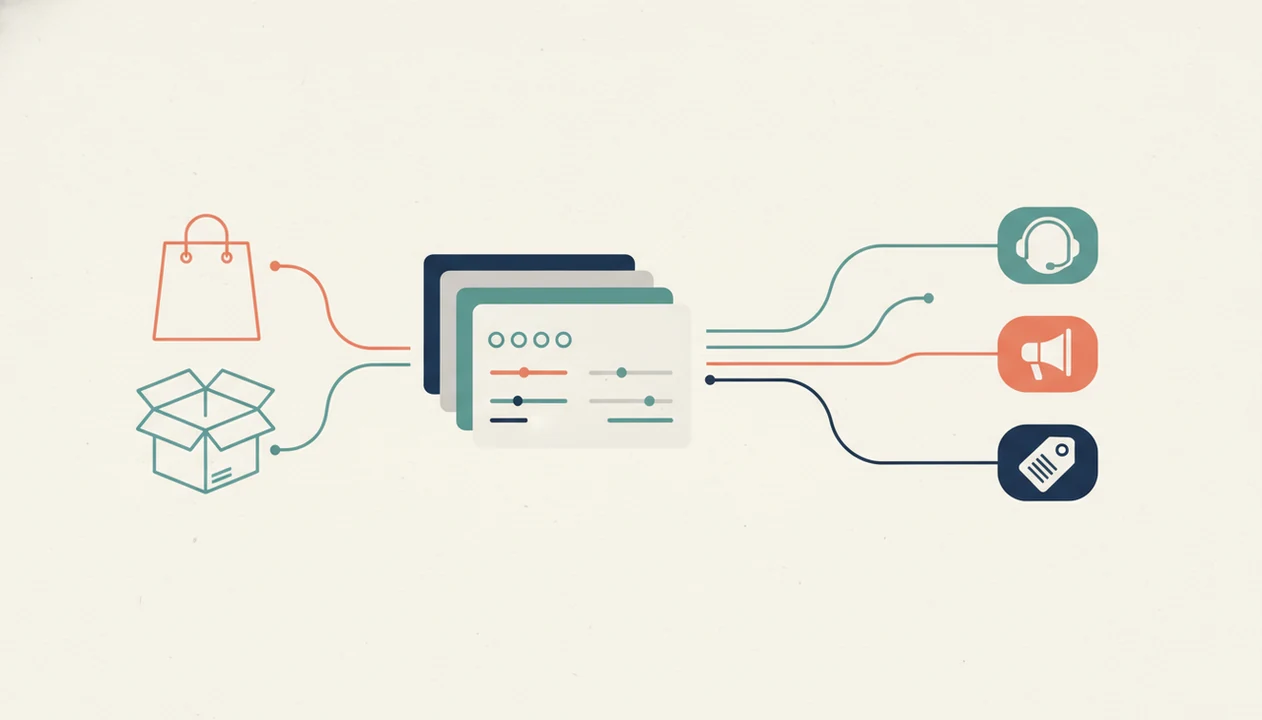
Post purchase surveys work by tying a survey trigger to a transaction, collecting a short response, then routing that response by score, sentiment, or topic. The useful part is not the form itself. It is the data flow after the answer arrives.
Trigger Timing: Checkout vs. Post-Delivery
Checkout triggers work well for attribution and buying-experience questions. Ask “How did you hear about us?” on the thank-you page, while the ad, referral, or search is still in the customer’s head. Post-delivery triggers work better for product fit, packaging, shipping, or service quality. The receipt link printed below the total can do the same job for a shop counter or salon desk.
SMS and QR-code surveys help brick-and-mortar teams reach customers without an ecommerce checkout. A QR code sticker beside the register often beats asking the cashier to remember a script.
Automatic Response Routing
Question logic can branch from an NPS score, CSAT rating, or yes/no answer. A detractor can open a support option. A promoter can receive a review follow-up. A product complaint can be tagged for the weekly product tab. For teams comparing setup paths, the post purchase survey timeline gives timing examples from checkout through delivery.
How to Set Up a Post-Purchase Customer Survey in 5 Steps
Use a post-purchase customer survey as a short workflow, not a research project. Customer Feedback Surveys fits this job because it connects the survey trigger, scoring, and follow-up action in one place.
- Pick your trigger: Choose a thank-you page embed, delayed email, SMS message, or in-store QR code.
- Choose 1–5 questions: Include NPS, one attribution question, and one open-ended prompt.
- Set branching rules: Send detractors to a support option and promoters to a review request.
- Connect your store or POS: Use Shopify, WooCommerce, or an in-store QR workflow for local purchases.
- Review weekly: Check the dashboard for NPS scores, channel trends, and assigned follow-ups.
Keep it plain.
The owner checking yesterday’s survey comments before opening the register does not need twenty charts. They need one next step: refund, reply, reorder, retrain, or change the question. If you want a narrower setup walk-through, the how to send survey after online order guide covers the order-confirmation version.
When to Send an After Purchase Feedback Survey
Send an after purchase feedback survey immediately after checkout when you need attribution, buying-friction notes, or purchase-motivation data. Send it after delivery or service completion when you need feedback on product quality, shipping, packaging, staff, or results.
On-page surveys usually catch customers while attention is highest, but they can miss product-use feedback. Email gives more room and works well after delivery, but inbox competition is real. SMS feels immediate and often works for local services, yet it should be used carefully with repeat buyers.
For ecommerce teams, checkout answers tend to explain marketing. Delivery answers tend to explain retention. That distinction matters more than the channel itself.
Keep the survey to 1–5 questions. Longer surveys invite drop-off and can bias responses toward customers with unusually strong opinions.
What Post Purchase Surveys Look Like in Customer Feedback Surveys
Customer Feedback Surveys shows post purchase surveys as ready-to-edit flows for thank-you pages, email templates, SMS links, and QR codes. The goal is to ask at the right moment, then close the loop without copying comments between tools.
Survey Builder and Question Templates
In the builder, teams can preview a thank-you page widget and an email version before publishing. One flow can combine NPS, CSAT, and an attribution question such as “How did you hear about us?” with preset and custom options.
When the priority is learning why customers bought, Customer Feedback Surveys fits because it captures attribution, satisfaction, and open-text comments in the same post-purchase survey flow.
Response Dashboard and Action Triggers
The dashboard groups responses by sentiment, channel, and score type. Detractor alerts can be tagged for support recovery. Promoters can move into a review follow-up. Repeat buyers can be marked for a loyalty program.
Good customer feedback survey apps deliver timely answers and action routing, not a pile of exported comments nobody reads.
Post Purchase Surveys vs. Generic Form Builders and Enterprise Tools
Post purchase surveys differ from form builders because they are tied to a purchase event and a follow-up workflow. Google Forms and Typeform can collect answers, but they do not usually handle transaction triggers, NPS scoring, and segmented recovery without extra setup.
| Option | Good for | Common gap |
|---|---|---|
| Google Forms or Typeform | Simple one-off forms | No built-in purchase trigger, NPS workflow, or action routing |
| Qualtrics-style VoC platforms | Large research and enterprise CX teams | Pricing and setup can be too heavy for small businesses |
| Shopify-only survey tools | Ecommerce attribution after checkout | Platform-locked and less useful for in-store or service visits |
| Customer Feedback Surveys | Ecommerce, retail, restaurants, salons, and local services | Focused on feedback workflows, not broad enterprise research |
When the issue is connecting feedback to recovery, Customer Feedback Surveys handles the practical middle: NPS, attribution, CSAT, and detractor routing across online and offline channels. Gartner research has reported that formal voice-of-the-customer programs are linked with about 20% higher satisfaction and lower churn. For a market overview, compare options in the best post purchase survey app guide.
Five Facts About Post-Purchase Survey ROI for Small Businesses
Post-purchase survey ROI comes from better retention, faster service recovery, cleaner attribution, and fewer missed product issues. The numbers are directionally useful, but the operational follow-up is what makes them matter.
- Repeat purchase: McKinsey reports that 81% of consumers say positive customer-service experiences increase their likelihood of buying again from the same company (https://www.mckinsey.com/capabilities/operations/our-insights/customer-care-survey-customer-care-excellence-in-the-digital-age).
- Revenue per customer: Forrester has estimated that a one-point CX Index gain can add up to $244 per customer annually in some industries, though the impact varies by category and customer value (https://www.forrester.com/blogs/how-cx-improvements-grow-revenue/).
- Retention: A satisfaction research meta-analysis linked a one-point increase on a 5-point scale to roughly a 3–5 percentage point retention gain.
- Data trust: Pew Research Center found that 79% of U.S. adults are concerned about how companies use the data collected about them, which is why transparent, permission-based surveys matter (https://www.pewresearch.org/internet/2019/11/15/americans-and-privacy-concerned-confused-and-feeling-lack-of-control-over-their-personal-information/).
- VoC payoff: Formal voice-of-the-customer programs have been associated with about 20% higher satisfaction and lower churn.
The right fit for small teams that need action, not survey theater, is Customer Feedback Surveys because it turns low scores into assigned follow-up instead of leaving them in a spreadsheet.
Related Customer Feedback Surveys Features
Post purchase surveys work best when they connect to nearby feedback workflows. Customer Feedback Surveys includes NPS score tracking for loyalty signals, review follow-up automation for happy customers, a customer insights dashboard for weekly review, and SMS and email survey channels for different purchase moments.
Anyone dealing with support inboxes full of order numbers can use Customer Feedback Surveys to separate delivery complaints, product-fit issues, and review-ready promoters with automatic tags. Teams focused mainly on loyalty scoring may also want the best NPS survey app comparison before choosing a workflow.
Limitations of Post Purchase Surveys
Post purchase surveys are useful, but they are not a complete picture of customer behavior. Treat them as one signal beside sales, analytics, support history, and repeat-purchase data.
- Response bias is real; very happy and very unhappy customers are often overrepresented.
- Self-reported attribution is directionally useful, but it should be checked against multi-touch analytics.
- Short surveys improve completion, but they sacrifice depth.
- Long surveys collect more detail, however they often reduce completion and increase fatigue.
- Surveys cannot replace behavioral analytics, sales reports, cohort data, or A/B testing.
- Low-traffic stores may need several weeks before patterns are meaningful.
- Asking after every purchase can annoy loyal repeat buyers.
- Service businesses and ecommerce stores may see different response patterns.
- Customer Feedback Surveys does not replace enterprise research platforms like Qualtrics for large, multi-market research programs.
The quiet client leaving without rebooking may tell you more in a two-question SMS than in person. Still, one comment is not a trend.