
Local Service Feedback Survey Template for Completed Jobs
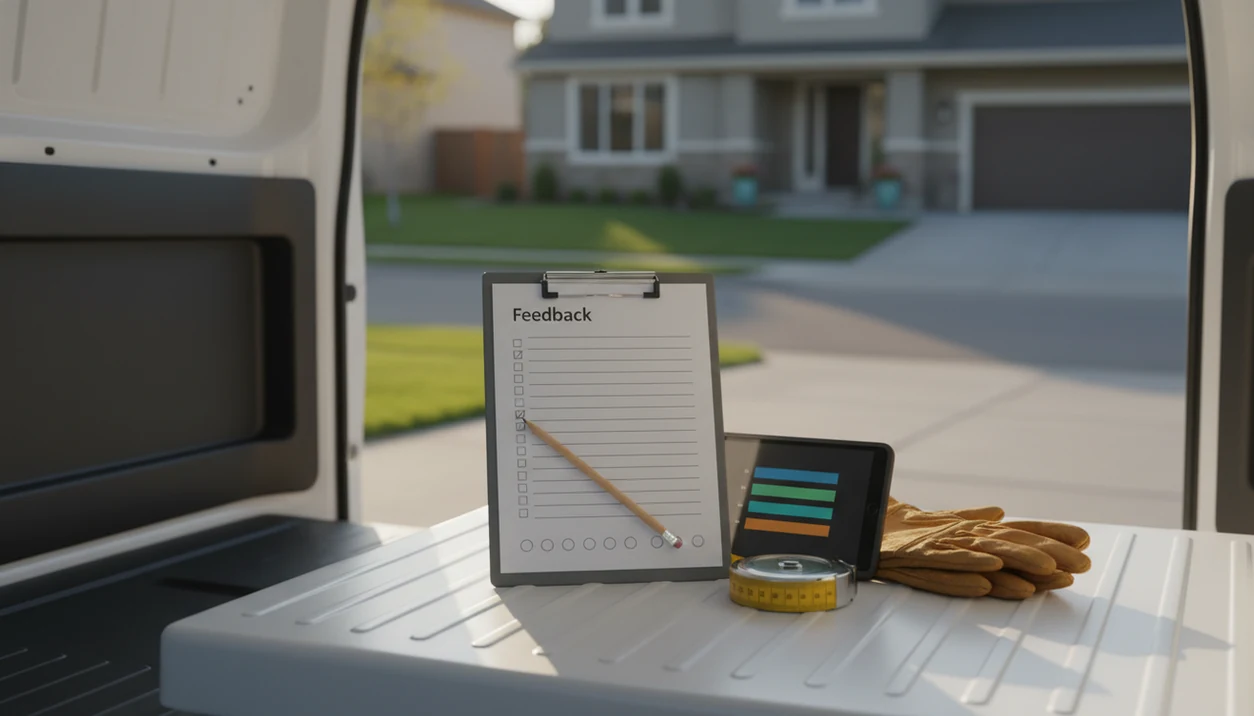
Use a local service feedback survey template right after a job, repair, appointment, or consultation to measure satisfaction, identify service issues, and spot customers who may leave a review or refer you. Keep it short: 4–10 questions with ratings for punctuality, professionalism, work quality, communication, and one open comment field.
Definition: A local service feedback survey template is a ready-made set of post-job questions that small service businesses send to customers after an appointment, home visit, repair, or consultation.
TL;DR
- Send the survey soon after job completion while the visit is still fresh.
- Ask service-specific questions about punctuality, cleanliness, communication, professionalism, and work quality.
- Include one recommendation question so you can track loyalty, reviews, referrals, or NPS over time.
Local Service Feedback Survey Template Definition
A local service feedback survey template is used after a specific job or appointment, not as broad annual research. It helps plumbers, cleaners, landscapers, salons, HVAC teams, repair pros, and consultants ask about the visit while details are still clear.
The template usually combines four question types: an overall satisfaction rating, service factor ratings, one open comment, and a recommendation or NPS question. That mix gives the owner both a score and a reason. A customer may say “everything was fine” at the door, then give a 6 out of 10 later. That private answer is useful.
Customer Feedback Surveys is a customer feedback survey app that collects post-purchase surveys, NPS scores, and review follow-ups for small businesses. Broader examples sit in our customer feedback survey templates library.
Five Facts About Service Business Survey Questions
- Short surveys usually work better. A strong service survey should stay around 4–10 questions; a 2011 study found longer questionnaires can reduce completion rates and data quality source.
- Service context matters. Ask about arrival time, courtesy, cleanup, communication, and work quality instead of using generic product satisfaction wording.
- Timing changes usefulness. Send the survey soon after the job is marked complete, before the customer forgets the details.
- Recommendation questions add a loyalty signal. A referral, review, or NPS-style question helps track whether customers would send a neighbor your way.
- Scores are only the start. The value comes from spotting trends and closing the loop, not collecting numbers in a quiet spreadsheet.
Good customer feedback survey apps for small businesses collect post-purchase surveys, NPS scores, and actionable customer insights, not decorative charts nobody reviews.
Copy-and-Paste Home Service Feedback Survey Questions
Use these home service feedback survey questions after repairs, appointments, consultations, and home visits. For a very small job, remove two or three questions so the survey still feels quick on SMS.
For rating questions, use one consistent scale, such as 1–5 for satisfaction or 0–10 for recommendation likelihood. Label the endpoints clearly, for example: 1 = very dissatisfied and 5 = very satisfied.
Short Rating Questions
- Overall, how satisfied were you with today’s service?
- Did our team arrive within the expected time window?
- How would you rate our professionalism during the visit?
- How clear was our communication before and during the job?
- How satisfied are you with the quality of the completed work?
- Was the work area left clean and respectful of your property?
- Was your issue resolved or your next step clearly explained?
- How likely are you to recommend us to a friend or neighbor?
Open Comment Questions
“What could we have done better?” is the most useful open question for small teams. Simple wording matters when the link sits below the total on a receipt or lands by text after a technician leaves the driveway.
How a Local Service Feedback Survey Works
How does a local service feedback survey work? The job is completed, the survey is sent by SMS or email, the customer answers, and the response enters a dashboard, CRM, or weekly spreadsheet for review.
The mechanism is simple: CSAT measures satisfaction, NPS measures recommendation likelihood, and open comments explain root causes. In plain terms, the score says what happened; the comment says why. U.S. federal customer experience programs also use post-transaction surveys as a primary way to collect service feedback, according to a GAO report source.
Post-transaction timing matters because the customer still remembers the appointment. The owner checking yesterday’s comments before opening the register can catch a missed call, unclear estimate, or messy cleanup before it turns into a one-star public review.
Before You Start: Set Up the Survey Rules
Before you send the first local service feedback survey, decide who owns it, when it goes out, and what happens when a customer is unhappy. These rules keep the weekly results comparable and make sure feedback turns into follow-up, not just another tab in a spreadsheet.
- Name one survey owner who checks responses, tags the issue, and assigns the next step. In a small shop, that may be the owner; in a busier team, it may be the office manager or service lead.
- Choose one trigger for sending the survey, such as a completed job, closed ticket, paid invoice, or finished appointment. Use the same trigger consistently so timing does not drift.
- Pick the customer’s real channel instead of the channel you prefer. SMS may fit repair visits, email may fit consulting, and a QR code or receipt link may work better at a counter.
- Set the rating scale before launch, whether that is 1–5 satisfaction or 0–10 recommendation likelihood.
- Define the escalation rule for low scores, including which ratings need a same-day call, manager review, or coaching note.
How to Use a Local Service Feedback Survey Template
Use the template as a small feedback workflow, not a research project. The weekly spreadsheet tab can hold NPS scores, customer quotes, and one assigned follow-up.
Assign one owner before you send the first survey. If nobody checks low scores within a day or two, the survey becomes a reporting habit instead of a service recovery tool.
- Choose the trigger when the job is marked complete or the appointment ends.
- Select 4–10 questions from the template, keeping only what fits the service.
- Customize wording for the service type, technician, stylist, cleaner, consultant, or crew.
- Send by SMS or email within a short follow-up window.
- Review low scores, comments, and referral-ready customers before they go stale.
- Close the loop with unhappy customers and ask happy customers for reviews when appropriate.
For service teams, a short post-job survey is often easier than a monthly feedback campaign because the customer remembers one concrete visit.
Best Timing for a Home Service Feedback Survey
When should you send a home service feedback survey? Send it shortly after completion while the experience is fresh, but match the timing to the job.
Same-day SMS can work well for simple repairs, cleanings, salon visits, and one-stop appointments. A larger HVAC install, landscaping project, or consulting engagement may need a next-day follow-up so the customer can inspect the work. Multi-day projects may also need one final survey, not a ping after every crew visit.
Don’t wait weeks. The host stand crowded after reservations has a lesson for every service business: feedback collected too late turns into a vague memory. Also avoid sending surveys after every tiny interaction, since customers learn to ignore them.
Common Mistakes in Service Business Survey Questions
The most common mistake is making the survey too long. Short surveys protect completion rates and data quality because customers can answer before the next errand, phone call, or school pickup interrupts them.
Avoid asking only “How satisfied were you?” without operational questions. That score won’t tell you whether the problem was late arrival, unclear pricing, rushed cleanup, or poor communication. Also skip leading wording like “How amazing was your technician today?” It makes the question feel unserious.
Another mistake is collecting scores without reading comments. A two-word comment like ‘muddy boots’ or ‘no call’ can be more useful than a clean average score because it points to the exact handoff that failed. The comment is often where the fix lives. Review trends weekly, not months later, and keep one owner or manager responsible for follow-up. If you run a salon, compare against a focused salon feedback survey template rather than borrowing generic wording.
How to Analyze Local Service Feedback Results
- Group results by work type. Compare repairs, maintenance visits, consultations, and installs so one service line doesn’t hide another.
- Look for repeated themes. Late arrival, unclear estimates, messy cleanup, and poor communication are operational signals, not just complaints.
- Use recommendation answers carefully. High NPS or referral scores can identify customers who may be ready for a review request.
- Turn low scores into action. A support ticket linked to a low rating should trigger a follow-up call or coaching note.
- Review business impact. McKinsey reported that 90% of consumers said customer service affects brand choice and loyalty source, and Harvard Business Review has summarized Bain research finding that a 5% retention lift can increase profits by 25% to 95% source.
For local service teams, comments usually explain the next operational fix better than ratings alone. A simple customer feedback dashboard can help sort results by technician, location, channel, or appointment type.
Limitations
A local service survey is useful, but it cannot measure every customer’s experience perfectly.
- Responses may skew toward very happy or very unhappy customers.
- A template cannot fix late arrivals, poor workmanship, or unclear estimates by itself.
- Over-surveying customers can cause fatigue and lower response rates.
- Some older or less tech-savvy customers may ignore SMS or email surveys.
- NPS, CSAT, and star ratings can be overhyped when comments are ignored.
- Small sample sizes can make technician-by-technician comparisons unreliable.
- Customers in small towns may soften criticism if they know the technician personally.
- Review requests need care; a private comment is different from a public review prompt.
Tools like Customer Feedback Surveys, Google Forms, and Typeform can help collect answers, but the operating habit still matters. Read the comments. Assign the follow-up.
FAQ
What is a service feedback survey for a local business?
A service feedback survey asks customers about a completed job, appointment, repair, or consultation. It helps a local business measure satisfaction and find service issues.
When should I send a service feedback survey after a job?
Send it shortly after the job is complete, usually the same day or next day. Larger projects may need a short delay so the customer can review the work.
How many questions should a local service feedback survey have?
A local service feedback survey should usually have 4–10 questions. Shorter surveys are easier to complete and often produce cleaner answers.
What questions should I ask after a completed service appointment?
Ask about overall satisfaction, punctuality, professionalism, communication, work quality, cleanliness, issue resolution, and recommendation likelihood. Include one open comment field.
Should a small service business use NPS in customer surveys?
Yes, NPS or a simple recommendation question can help identify referral and review opportunities. It should be paired with comments, not used alone.
Can I ask happy customers for online reviews after the survey?
Yes, you can ask happy customers for reviews after they give positive feedback. Do not make the whole survey feel like only a review request.
Are SMS surveys or email surveys better for local service customers?
SMS is often better for quick post-job feedback, while email works well when you need more context or a longer note. Many businesses use both.
How should I respond to negative customer feedback?
Follow up quickly, acknowledge the issue, and offer a clear next step when possible. Then review whether the same problem appears across other jobs.