
Salon Feedback Survey Template For Client Visits
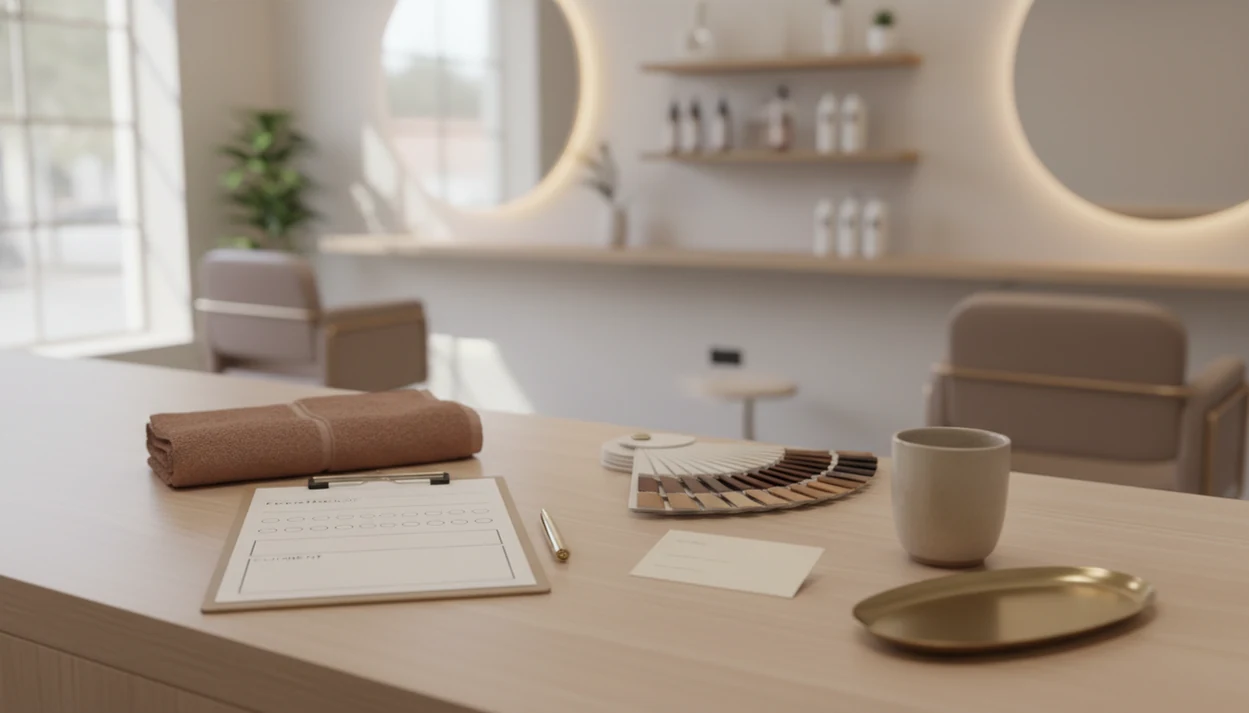
A salon feedback survey template is a ready-made post-appointment questionnaire that helps salons and spas ask clients about booking, consultation, stylist care, cleanliness, results, value, and rebooking intent. Use a short mobile survey with ratings, one NPS-style question, and one open comment box so feedback is easy to answer and easy to act on.
> Definition: A salon feedback survey template is a structured set of salon client feedback questions sent after a hair, beauty, or spa appointment to measure satisfaction and identify service improvements.
TL;DR
- Keep the survey to 5–10 mobile-friendly questions and send it soon after the appointment by SMS or email.
- Cover the full client journey: booking, arrival, consultation, service result, cleanliness, checkout, and rebooking.
- Use ratings for tracking trends, NPS for referral intent, and open-ended comments for the specific fixes ratings miss.
Salon Feedback Survey Template Definition And Best Use Case
A salon feedback survey template is for post-appointment follow-up, not broad market research or brand awareness studies. It works best when the client has just experienced the booking flow, the consultation, the service, and checkout.
Hair salons, beauty salons, barbershops, lash studios, nail salons, med spas, and spas can all use the same basic structure. The wording changes, but the job stays practical: find service gaps, protect client retention, guide review follow-up, and understand rebooking intent.
The owner checking yesterday’s survey comments before opening the register needs clear signals, not a 40-question research form. One private comment about a rushed toner consultation is easier to recover than a one-star public review.
Customer Feedback Surveys is a customer feedback survey app that collects post-purchase surveys, NPS scores, and review follow-ups for small businesses. For a broader library, many teams start with customer feedback survey templates and then tailor the questions to salon visits.
Five Salon Client Feedback Questions Every Template Needs
A useful salon feedback survey template covers the whole visit, uses simple scales, and leaves room for the client’s own words. These five question areas keep the survey focused enough for real clients to finish.
- Full journey coverage: Booking, reception, consultation, service result, payment, and rebooking should all appear because a poor visit can break at any point.
- Standardized ratings: Use 5-point satisfaction ratings for touchpoints like cleanliness, consultation, and checkout so weekly trends are easy to compare.
- Mobile speed: Most salon client feedback questions should fit on one phone screen at a time, with plain labels and no long matrix grids.
- Open-ended comments: Scores show where to look, but comments explain the why, such as “the color was right, but the blow-dry felt rushed.”
- Follow-up process: Add a low-score alert or owner review step, so feedback turns into a client recovery action.
An NPS-style question uses a 0–10 likelihood-to-recommend scale. It pairs well with satisfaction ratings because referral intent and appointment quality are related, but not identical.
How A Salon Feedback Survey Template Works After Appointments
A salon feedback survey template works by turning an appointment into a structured feedback event. The completed visit triggers an SMS or email, the client answers on mobile, and scores plus comments flow into a dashboard.
In practice, responses can be tagged by stylist, service type, location, appointment date, and client status. A color correction from a returning client should not be read the same way as a first fringe trim. That context matters when the stylist checking the appointment book sees three low consultation scores from one service category.
Pew Research Center reported that 81% of U.S. adults owned a smartphone in 2019, which is why salon surveys need to load cleanly on mobile source. AHRQ's CAHPS survey guidance also supports using standardized experience questions so teams can compare results over time instead of relying only on casual comments source.
NPS shows referral intent, satisfaction ratings show touchpoint quality, and comments explain the story. Low scores should route to the owner or manager quickly, especially when the client says everything was fine in person but gives a 6 out of 10 later.
Salon And Spa Customer Survey Template Questions
What should a salon or spa customer survey ask after an appointment? Ask about the specific moments the client just experienced, then end with referral intent and an open comment.
Copy-Ready Salon Survey Questions
- How easy was it to book or change your appointment? 1–5 scale
- How satisfied were you with your wait time when you arrived? 1–5 scale
- Did your stylist or provider understand what you wanted? Yes/no
- How would you rate the consultation before the service began? 1–5 scale
- How friendly and professional was our team today? 1–5 scale
- How clean and comfortable did the salon feel? 1–5 scale
- How satisfied are you with your final result? 1–5 scale
- How fair did the price feel for the service you received? 1–5 scale
- How likely are you to recommend us to a friend? 0–10 scale
- What could we improve before your next visit? Open text
A receipt link printed below the total can work for walk-ins, but SMS usually feels more natural after booked services.
Optional Spa Customer Survey Questions
For a spa customer survey, add: “How comfortable, private, and calm did the treatment room feel?” Use a 1–5 scale. Also ask, “Are you likely to rebook this service in the next 30–60 days?” Use yes/no/not sure.
Before You Send A Salon Feedback Survey
Before you send a salon feedback survey, make sure the workflow is clear enough that feedback will be collected, reviewed, and acted on. The goal is not just a nicer form; it is a repeatable recovery and coaching routine.
- Confirm the appointment event that will trigger the survey, such as completed checkout, marked-as-finished service, online booking closeout, or a manual QR code handoff for walk-ins.
- Assign low-score ownership before the first response arrives. Decide whether the owner, manager, front desk lead, or provider reviews unhappy comments, and set a response window that feels fast to clients.
- Remove details that do not need to be asked. Keep questions focused on experience, comfort, communication, timing, and results rather than sensitive treatment history or personal information.
- Test the survey on a phone, including the first tap from SMS or email, the rating screens, the open comment box, and the final thank-you message.
- Schedule one weekly review time for scores, comments, themes, and follow-up tasks so the survey does not become another unread inbox.
How To Use A Salon Feedback Survey Template
Use a salon feedback survey template by choosing a narrow goal first, then connecting the questions to your appointment or checkout flow. The smallest working setup is better than a polished form nobody sends.
- Choose the 5–10 questions that match your current goal, such as rebooking, consultation quality, cleanliness, or service recovery.
- Add one 0–10 NPS question, a few 1–5 satisfaction ratings, and one open comment box.
- Connect the template to completed appointments, checkout, or a QR code sticker beside the register.
- Send the survey by SMS or email within 24 hours, while the haircut, facial, manicure, or massage is still fresh.
- Review trends weekly and follow up with unhappy clients before the complaint becomes public.
Tools like Customer Feedback Surveys, Google Forms, Typeform, and Jotform can all support basic survey sending. Good customer feedback survey apps for small businesses collect post-purchase surveys, NPS scores, and actionable customer insights, not enterprise research theater.
For salons with other local services under one owner, a local service feedback survey template can help keep wording consistent across appointment types.
Salon Feedback Survey Rating Scales And NPS Scores
Salon rating scales work best when each scale has one clear job. Use 5-point ratings for appointment touchpoints, 0–10 NPS for referral intent, yes/no for simple checks, and open text for the detail behind the score.
| Question type | Best use in a salon survey | What it tells you |
|---|---|---|
| 5-point satisfaction rating | Cleanliness, wait time, consultation, final result | Whether a specific touchpoint is improving |
| 0–10 NPS | “How likely are you to recommend us?” | Referral intent, not every detail of satisfaction |
| Yes/no question | “Did you receive aftercare advice?” | Whether a promised step happened |
| Open text | “What could we improve?” | The client’s exact issue or praise |
McKinsey reported that a 5-point increase in customer satisfaction scores was associated with a 25–95% increase in customer loyalty, depending on the sector source. HBR's original NPS article reported that companies with higher recommendation scores often grew faster than competitors, but NPS should still be paired with touchpoint ratings and comments in salon surveys source.
Do not overreact to one sharp response. Track patterns over time, especially by stylist, service, and new versus returning client.
Common Salon Client Feedback Survey Mistakes
The most common salon survey mistake is asking too much and acting on too little. Long surveys reduce focus, and clients rarely want to grade every detail after a weekday trim or lunch-hour wax.
Generic restaurant or retail questions also miss salon-specific moments. A retail customer feedback survey template may ask about shelf labels or stock levels, but a salon needs questions about consultation quality, comfort, aftercare advice, timing, and final result.
Timing is another problem. Sending the survey three days later means the client may remember the parking situation better than the service itself. Within 24 hours is usually more useful.
Small independent salons benefit from templates because lightweight systems matter for small teams. If you cite salon or personal-care firm size, use the exact NAICS table from U.S. Census Bureau SUSB data and link it inline; otherwise soften the claim to: "Many salons operate with small teams, so they need a repeatable feedback workflow rather than a research department" source. That kind of team does not need a research department; it needs a repeatable feedback workflow.
Collecting feedback without tagging themes or following up does not improve retention. It just creates another inbox.
Salon Feedback Survey Results And Staff Coaching Workflow
Salon feedback becomes useful when someone reviews it on a schedule and assigns one next step. A simple weekly workflow is enough for many small teams: review scores, tag comments, identify repeated issues, coach staff, update procedures, and close the loop.
Use segmentation before coaching. Compare feedback by stylist, service type, branch, and new versus returning client. A new client’s low score may point to consultation clarity. A returning client’s comment may point to a change in service consistency.
The weekly spreadsheet tab should be boring in a good way: NPS scores, customer quotes, one assigned follow-up. Not a mystery pile.
Feedback can support consultation training, aftercare scripts, retail recommendations, and rebooking prompts. For example, repeated comments about “not sure what product to use at home” can become a standard checkout script. A customer feedback dashboard can also help owners spot trends without reading every response manually.
Route low-score alerts to managers. When a client is happy, ask for a review where appropriate, but do not pressure or gate reviews based on score.
Limitations
A salon feedback survey template helps organize client input, but it cannot prove everything about service quality or staff performance. Treat it as one operating signal, not the whole truth.
- Survey responses can be biased toward very happy or very unhappy clients.
- Standardized scores do not reveal the full why unless clients leave comments.
- Templates cannot fix staff training, scheduling gaps, or inconsistent service quality by themselves.
- Small sample sizes can make stylist comparisons unfair, especially for part-time staff or niche services.
- Spa, beauty, and personal-care feedback can include privacy-sensitive details, so avoid asking for more personal information than needed.
- Feedback should support coaching, not become a punitive scorecard that makes staff hide problems.
- NPS measures referral intent, but it does not explain whether the issue was price, tone, timing, or final result.
- A single angry comment may matter, but repeated themes should carry more weight in process changes.
Use the survey to close the loop. Then fix one thing.
FAQ
What is salon feedback?
Salon feedback is client input about the appointment experience, including booking, staff care, cleanliness, final results, value, and rebooking likelihood. It can come from ratings, comments, NPS scores, or direct messages.
When should salons send surveys?
Salons should usually send surveys within 24 hours of the appointment. The visit is still fresh, and the client can remember details about the consultation, service, and checkout.
How many questions work best?
Most salon and spa follow-ups work best with 5–10 questions. Short surveys are easier to complete on mobile and easier for the team to review.
What should salon surveys ask?
Salon surveys should ask about booking, wait time, consultation, staff care, cleanliness, final result, value, and rebooking intent. Add one open comment question for details ratings miss.
Should salons use NPS?
Salons can use NPS as a 0–10 likelihood-to-recommend question when they want to track referral intent. NPS does not measure every detail of satisfaction, so pair it with touchpoint ratings.
Are spa surveys different?
Spa surveys should include comfort, privacy, ambience, cleanliness, and therapist communication. A spa customer survey may also ask whether the treatment room felt calm and professional.
How do salons use complaints?
Salons should tag complaints by theme, follow up quickly, and use repeated issues for coaching or process fixes. A private complaint can often be recovered before it becomes a public review.
Can surveys improve rebooking?
Surveys can improve rebooking by revealing barriers such as unclear aftercare, poor timing, price concerns, or weak checkout prompts. Customer Feedback Surveys can help organize those responses, but the salon still has to follow up and adjust the client experience.