
Retail Customer Feedback Survey Template For Shops
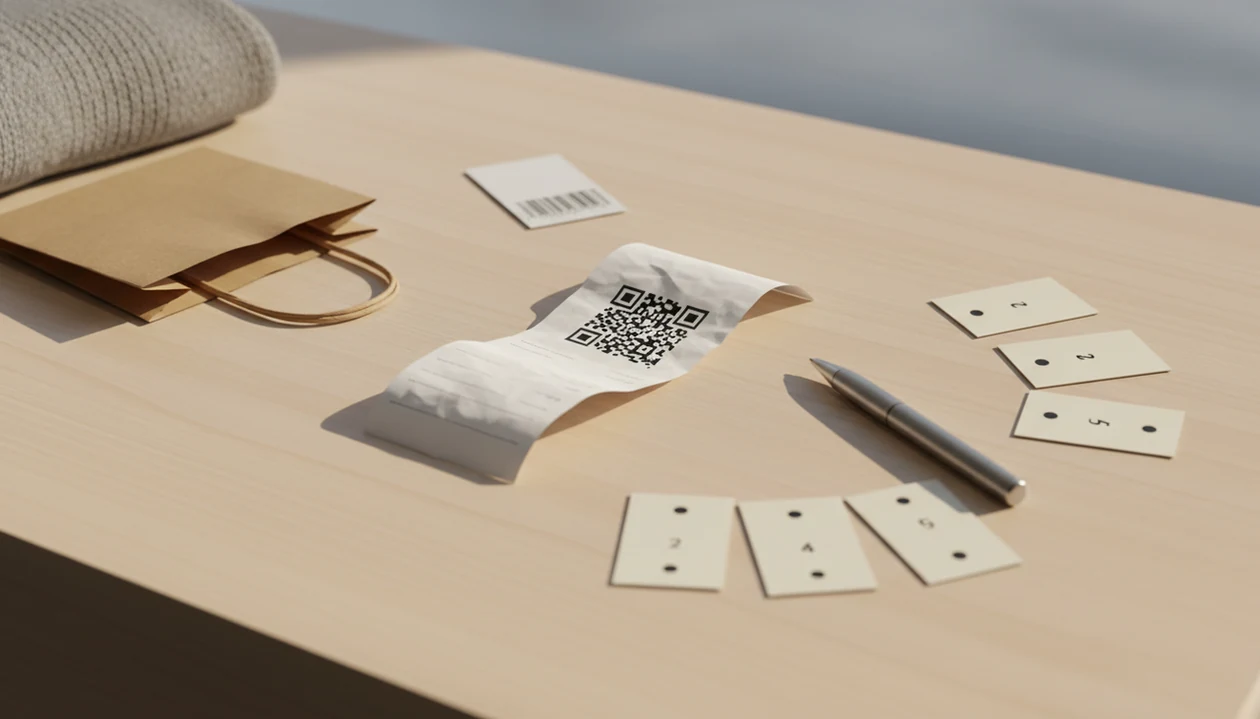
Use this retail customer feedback survey template to ask recent shoppers about product availability, staff help, store layout, checkout speed, satisfaction, and return intent in 5–10 questions. It works for in-store kiosks, QR codes on receipts, SMS links, or email follow-ups after a purchase.
Treat the 5–10 question range as a practical completion target, not a universal benchmark. If responses drop off on QR or SMS surveys, cut the least actionable question first.
A retail customer feedback survey template is a ready-made set of shop survey questions that captures customer satisfaction, NPS, and practical comments about a recent in-store shopping experience.
- Keep the retail shop survey short: 5–10 mobile-friendly questions is enough for receipt-based feedback.
- Cover the full store visit: products, staff, layout, checkout, satisfaction, NPS, and one open comment.
- Review responses weekly and connect each issue to an action such as staff coaching, replenishment, layout changes, or checkout fixes.
Retail customer feedback survey template definition for small shops
A retail customer feedback survey template is a reusable question set that helps small shops collect consistent feedback after an in-store purchase or visit.
For a small retailer, the template should fit a receipt link, QR code, SMS, email, or checkout tablet. It is not meant to be academic research. It is meant to help the owner spot patterns before they become one-star reviews or quiet customer churn.
The useful version asks about the real visit: whether the item was in stock, whether staff helped, whether checkout dragged, and whether the shopper would return. Tools like Customer Feedback Surveys can help a shop reuse the same form and track responses, but the value still comes from asking at the right moment and closing the loop.
Retail store survey questions that belong in the template
What retail store survey questions should go in a shop customer feedback form? Use plain questions that a shopper can answer on a phone in under two minutes.
Copy-ready shop customer feedback form
- Did you find the product or size you came in for?
- How helpful was our staff today? Use a 1–5 scale.
- How clean and organized did the store feel? Use a 1–5 scale.
- Was it easy to move through the store and find what you needed?
- Were prices, signs, and promotions clear?
- How would you rate checkout speed? Use a 1–5 scale.
- Overall, how satisfied were you with your visit? Use a 1–5 scale.
- How likely are you to recommend this shop to a friend? Use a 0–10 NPS scale.
- Are you likely to shop with us again in the next 30 days? Yes, no, or not sure.
- What is one thing we could improve?
Keep one open comment. More than that feels like homework on a receipt link printed below the total.
Before you start: retail survey prerequisites
Before you build the form, decide who the survey is for, what one decision it should support, and how the answers will be reviewed. A short retail survey works better when the store team knows the audience, channel, owner, and privacy promise upfront.
- Choose the shopper group first: recent buyers, people who browsed but did not buy, return customers, or loyalty members. Each group saw a different part of the store experience.
- Pick one main goal for the first version, such as finding stockout patterns, checking whether staff help is landing, or measuring checkout speed during busy hours.
- Confirm the collection channel before writing final wording. A receipt QR code can handle a few more questions than a counter tablet, while SMS and email need especially clear openings.
- Schedule a weekly review slot with the owner or manager before launch, not after comments start piling up.
- Explain how comments and follow-up contact will be used, especially if the form asks for a phone number, email address, or details about a bad visit.
Five retail feedback facts before you launch a shop survey
- A strong retail template covers the full store journey, from product availability to checkout.
- Receipt-based surveys should be short, mobile-friendly, and easy to finish before the shopper gets home.
- NPS and overall satisfaction answer different questions, so small shops should usually include both.
- Customer comments only matter when someone reviews them and turns them into a store action.
- The same core template can work across kiosk, QR receipt, SMS, and email if the wording stays clear.
For small shops, a weekly review habit is often more useful than a long monthly report because issues are still fresh. One owner checking yesterday’s survey comments before opening the register can catch a confusing display, a missing size run, or a rough checkout shift quickly.
Retail customer feedback survey workflow from receipt to store action
A retail customer feedback survey works by moving a recent shopper from purchase, to survey link, to response, to a dashboard or spreadsheet where the team can act. Timing matters because customers remember the store visit most clearly soon after checkout.
How retail customer feedback surveys work: rating scales create structured signals, while open comments explain the cause behind the score. A row that says “checkout speed: 2” is useful. A comment saying “only one register open at 5:40” is better.
A practical workflow records the channel, timestamp, store location, satisfaction score, NPS score, and comment. Customer satisfaction is tracked in systems such as the American Customer Satisfaction Index because it can connect experience signals with economic outcomes; treat that as directional evidence, not proof that one shop survey caused revenue changes (https://www.theacsi.org/). The shop version is simpler: a weekly spreadsheet tab with NPS scores, customer quotes, and one assigned follow-up. For larger tracking, a customer feedback dashboard can group trends by week and location.
How to use a retail customer feedback survey template
Use the template by choosing a clear goal, asking only the questions tied to that goal, and reviewing responses on a fixed schedule. A good customer feedback survey app for small businesses should collect post-purchase surveys, NPS scores, and actionable customer insights, not bury the owner in enterprise research tools.
Numbered setup steps
- Set the goal for the survey, such as improving checkout speed or finding stock gaps.
- Choose 5–10 questions from the template and keep the wording customer-facing.
- Add the survey to receipt QR codes, SMS, email, or a checkout kiosk.
- Review responses weekly and flag low scores the same day when possible.
- Turn repeated issues into store actions, such as replenishment changes or staff coaching.
- Track satisfaction and NPS over time instead of reacting to one odd day.
For small retailers, the same habit can sit beside broader customer feedback survey templates for service, ecommerce, or appointment-based businesses.
Receipt-based retail survey setup for QR codes, SMS, and kiosks
Receipt-based retail surveys work best when the shopper can answer quickly on the device already in their hand. Pew Research reports that most U.S. adults own smartphones, which supports mobile-first design for QR and SMS surveys (https://www.pewresearch.org/internet/fact-sheet/mobile/).
Keep question order consistent across channels. Otherwise, the Tuesday kiosk data and Friday receipt-link data become harder to compare.
| Channel | Best use case | Setup note |
|---|---|---|
| Receipt QR code | In-store buyers who may answer after leaving | Print the link below the total and label it clearly. |
| SMS or email link | Loyalty members or digital receipt users | Send soon after purchase, not three days later. |
| In-store kiosk | High-traffic counters or exits | Keep it to 3–5 taps if people are standing. |
For ecommerce orders with delivery feedback, use a separate flow like customer feedback surveys for ecommerce, since a dented mailer on the porch is a different problem than a crowded fitting room.
Shop customer feedback form actions for each survey answer
A shop customer feedback form is only useful when each answer points to a next step. The awkward moment is familiar: a customer says “everything was fine” in person, then gives a 6 out of 10 later.
| Survey signal | What it may mean | Store action |
|---|---|---|
| Low staff helpfulness | Coverage, training, or greeting issues | Review shift patterns and coach specific behaviors. |
| Product not available | Stockout, buying gap, or poor size mix | Adjust replenishment rules or buying decisions. |
| Slow checkout | Understaffed register or payment friction | Change staffing, payment steps, or queue layout. |
| Confusing layout | Weak signage or merchandising flow | Test signs, endcaps, and category placement. |
| Poor NPS or satisfaction | Recovery risk | Follow up privately and document the fix. |
For appointment-heavy shops, the same action mapping appears in a salon feedback survey template, though the questions shift toward service timing and rebooking.
7 common retail store survey question mistakes
Avoid weak survey forms that collect polite noise instead of useful feedback. “How was your visit?” is too broad by itself because it does not show whether the issue was staff, stock, price clarity, layout, or checkout.
Common mistakes include:
- Asking only one generic visit question.
- Making the survey so long that only irritated customers finish it.
- Writing leading questions that push for positive scores.
- Asking for satisfaction but not operational details.
- Ignoring open comments because they are messier than scores.
- Using the same unchanged template after adding new services.
- Reviewing results without assigning a next step.
Cold fries under the heat lamp tell a restaurant something specific. Retail needs the same level of signal: missing sizes, unclear sale signs, a wobbly basket by the front door.
Limitations
A retail survey template helps identify patterns, but it cannot prove every cause behind customer behavior. Treat it as one operating signal, not the whole truth.
- Responses may skew toward very happy or very unhappy shoppers.
- Customers can misremember visit details, especially if they answer later.
- Survey results should sit beside sales data, staff observation, returns, and mystery shopping.
- Chasing scores can create bad employee behavior, such as pressuring customers at checkout.
- Old templates may miss BOPIS, curbside pickup, self-checkout, or new loyalty services.
- Small sample sizes can make daily score changes misleading.
- Private comments are easier to recover from than a one-star public review, but they still need prompt follow-up.
Quiet data can still be biased.
FAQ
What is a retail survey?
A retail survey is a short customer feedback form about a recent shop visit. It usually asks about products, staff, layout, checkout, satisfaction, and comments.
What questions should I include in a retail customer feedback survey?
Include questions about product availability, staff helpfulness, store layout, checkout speed, overall satisfaction, NPS, return intent, and one open comment. Use simple scales and plain wording.
How long should a retail customer feedback survey be?
A retail customer feedback survey should usually be 5–10 questions. Receipt-based and mobile surveys work better when customers can finish them quickly.
Should retail surveys include NPS?
Yes, NPS can help track loyalty and recommendation intent. Pair it with satisfaction and operational questions so the score has context.
Are receipt surveys effective for stores?
Receipt surveys can work well when the QR code or link is easy to find, timely, and mobile-friendly. They are weaker when buried in tiny print.
How often should stores review customer feedback?
Stores should review customer feedback at least weekly. Serious complaints or very low scores should be checked faster.
Can small shops use a simple shop feedback form?
Yes, small shops can benefit because they often act quickly on direct customer comments. A simple form is enough if the team reviews it consistently.
What is a good response rate for a retail survey?
Response rates vary by channel, incentive, timing, and customer relationship. Trend quality matters more than one perfect benchmark.