
Product Feedback Survey After Delivery Questions and Template
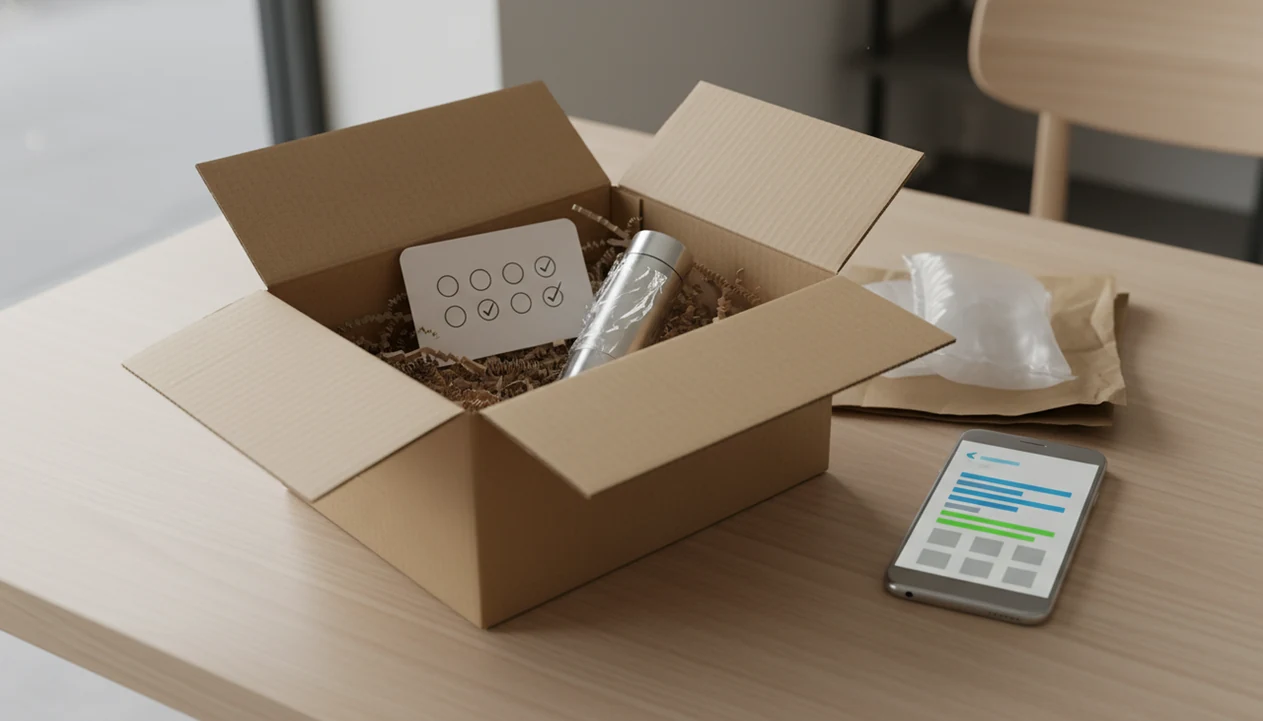
A product feedback survey after delivery is a short email or SMS questionnaire sent soon after an order arrives to catch delivery problems, damage, missing parts, fit issues, and first-impression product satisfaction while the experience is still fresh. Use a focused template with rating questions, one NPS or satisfaction question, and a few open-ended prompts so your team can act quickly.
Definition: A product feedback survey after delivery asks customers about the delivered product, packaging, shipping experience, and first-use satisfaction shortly after their order arrives.
TL;DR
- Send the survey within 24 hours to a few days after confirmed delivery, depending on whether you need delivery feedback or first-use product feedback.
- Keep the survey short: combine CSAT, NPS or star ratings with targeted open-ended questions about damage, quality, packaging, and expectations.
- Segment responses by product, carrier, fulfillment location, and issue type so feedback leads to specific fixes instead of vague averages.
Product feedback survey after delivery definition for small ecommerce teams
A product feedback survey after delivery is sent after confirmed delivery, not right after checkout. That timing matters because the customer has actually seen the package, opened the box, and formed a first opinion about the product.
For small ecommerce teams, the survey usually covers shipping speed, packaging, product condition, missing parts, fit, quality, expectations, and overall satisfaction. Customers may call it a delivery feedback survey, product satisfaction survey, or post-purchase survey, but the job is the same: ask while the order is still easy to remember.
A return label printed beside scissors tells a different story than a five-star checkout experience. The survey helps catch that moment before it turns into a refund request or a public complaint.
A good customer feedback survey app for small businesses should collect post-purchase survey responses, NPS scores, defect tags, and actionable customer insights, not vague praise that never changes the next shipment.
Five product feedback survey facts after delivery
- Send quickly: Most product feedback surveys after delivery should go out within 24 hours to a few days after confirmed delivery, depending on the product and use case.
- Mix question types: Use simple ratings for comparison, then open text to explain what actually happened in the package or first use.
- Pick one goal: Decide whether you are measuring delivery reliability, product quality, packaging, support recovery, or review readiness before choosing questions.
- Read themes, not just averages: A 4.6 average can hide repeated comments about dented boxes, loose caps, or confusing instructions.
- Automate when volume grows: Once orders arrive daily, a feedback or NPS app helps tie responses to products, carriers, and fulfillment locations.
The owner checking yesterday’s survey comments before opening the register needs a short list, not a research report. One assigned follow-up beats twenty unread comments.
How a delivery feedback survey works after an order arrives
A delivery feedback survey works by using delivery confirmation as the trigger for an email or SMS survey. The response then connects back to order, product, customer, carrier, and fulfillment data so the team can see where the issue started.
The light technical term is event-triggered feedback. In plain English, the survey is sent because a delivery event happened, not because a marketer picked a random date. Fresh recall makes comments more useful, but it may not capture long-term durability. A chair can arrive intact on Tuesday and start wobbling three weeks later.
Customer Feedback Surveys is a customer feedback survey app that collects post-purchase surveys, NPS scores, and review follow-ups for small businesses. For a broader order-based setup, the steps in how to send survey after online order are closely related.
Immediate delivery feedback
Immediate delivery feedback asks about shipping speed, box condition, damage, wrong items, and missing parts.
Delayed product-use feedback
Delayed product-use feedback asks about fit, usability, quality, instructions, and whether the product met expectations after real use.
Product satisfaction survey requirements before you send
Before sending a product satisfaction survey, define the primary goal. Choose one main purpose: delivery reliability, product quality, packaging, support recovery, or review generation.
Next, choose the trigger and response window. For delivery issues, use confirmed delivery plus about 24 hours. For fit, flavor, comfort, setup, or durability, wait a few days or longer. Decide whether every order gets the survey or only a sample. Frequent buyers can tire of repeated requests, especially if they order weekly.
Prepare tags before comments arrive: damaged, late, wrong item, missing part, poor fit, confusing instructions, poor quality, and unmet expectation. Tags keep the weekly spreadsheet tab from becoming a junk drawer.
Set an owner too. If a customer says “everything was fine” in person but gives a 6 out of 10 later, somebody needs to decide whether to email, replace, refund, or simply note the pattern.
How to use a product feedback survey after delivery
Use a product feedback survey after delivery as a small operating workflow, not a one-time questionnaire. The value comes from timing, tagging, and follow-up.
- Set one goal for the survey before writing questions, such as finding damaged shipments or measuring first-use satisfaction.
- Trigger the survey from confirmed delivery, not purchase confirmation.
- Ask 5 to 8 questions covering delivery, product condition, satisfaction, and open comments.
- Segment results by product, carrier, fulfillment location, and customer type.
- Review negative responses daily or weekly and assign follow-up to a named person.
- Track trends over time with CSAT, NPS, defect tags, return reasons, and repeat purchase data.
For small ecommerce teams, a short survey tied to delivery data is often easier to act on than a quarterly customer research project because the problem still has an order number attached. The receipt link printed below the total works for stores; shipped orders need the same clarity in email or SMS.
Product feedback survey after delivery question template
“What questions should I ask in a product feedback survey after delivery?” Start with delivery, product condition, satisfaction, and one open comment field. Keep it short enough that a customer can finish on a phone while standing near the opened box.
Rating questions
- How would you rate your delivery experience?
- Did your order arrive when expected?
- Was the product in good condition when you opened the package?
- How satisfied are you with the product so far?
Open-ended questions
- Was anything damaged, missing, or different from what you expected?
- What could we improve about the product, packaging, or delivery?
- If you needed instructions or setup help, what was unclear?
Optional NPS question
- How likely are you to recommend this product to a friend or colleague?
NPS is widely used, but it should not replace issue-specific questions. Bain describes NPS as a loyalty metric based on likelihood to recommend (https://www.netpromotersystem.com/about/), so treat it as a loyalty signal rather than a diagnostic for damage, fit, missing parts, or unclear instructions.
Delivery feedback survey timing and follow-up windows
A delivery feedback survey is usually strongest about 24 hours after delivery for shipping, packaging, damage, and missing item feedback. Product-use surveys often work better a few days to two weeks later, depending on how quickly the customer can judge the item.
| Product type | Suggested timing | What to ask |
|---|---|---|
| Apparel | 1 to 3 days after delivery | Fit, sizing, fabric feel, returns risk |
| Electronics | 3 to 10 days after delivery | Setup, missing parts, usability, early defects |
| Food | Same day to 2 days | Freshness, temperature, packaging, taste |
| Home goods | 3 to 14 days | Damage, assembly, quality, expectations |
| Replenishable products | After first use or before reorder window | Satisfaction, quantity, repeat purchase intent |
Use one combined survey when the product can be judged quickly. Use two separate touchpoints when delivery quality and product performance need different response windows.
Too many pings feel noisy. Frequent buyers should not receive a survey after every small reorder unless you are sampling.
There is no single best timing window for every product. Treat the table above as an operating starting point, then adjust based on response rate, complaint quality, return timing, and whether customers actually had enough time to use the item.
Product satisfaction survey analysis and closed-loop actions
Product satisfaction survey analysis should group responses by theme first, then connect those themes to operational data. Common groups include shipping, packaging, product defects, instructions, fit, expectations, and support.
Segment the results by carrier, SKU, fulfillment center, supplier, product category, geography, and order value. Ratings help spot trends, while open text explains root causes. “Box crushed” across one carrier route means something different from “runs small” across three apparel sizes.
The useful habit is a weekly spreadsheet tab with NPS scores, customer quotes, defect tags, and one assigned follow-up. Plain. Visible.
Follow up with customers who report damage, missing parts, or severe dissatisfaction. Connect survey insights to returns, refunds, reviews, repeat purchases, and support tickets. McKinsey argues that customer-experience improvement works best when companies connect feedback across the full customer journey instead of optimizing isolated touchpoints (https://www.mckinsey.com/capabilities/growth-marketing-and-sales/our-insights/from-touchpoints-to-journeys-seeing-the-world-as-customers-do), so the key phrase is still 'acting on.' Collection alone does not close the loop.
Tools like Customer Feedback Surveys, Google Forms, Typeform, and Jotform can all collect responses; the difference is how easily your team can turn feedback into a next step. If you are comparing app options, the best post purchase survey app guide covers that decision in more detail.
Common product feedback survey mistakes after delivery
The most common mistake is sending the survey too late for the customer to remember the delivery experience clearly. A dented mailer on the porch is vivid today; two weeks later, it becomes a vague complaint about “shipping.”
Another mistake is asking too many questions. Long surveys may look thorough inside a planning meeting, but customers often abandon them halfway. Keep the core survey to 5 to 8 questions unless you have a strong reason.
Do not rely only on average ratings. Open-ended responses show whether a low score came from a slow carrier, cracked packaging, wrong size, missing part, or poor instructions. Separate delivery problems from product problems before assigning fixes.
Ownership matters. If nobody is assigned to urgent negative feedback, the survey becomes a complaint archive. Incentives can lift response volume, but they are not a substitute for useful questions and timely follow-up. The server refilling water mid-complaint understands this already: recovery has to happen while the customer still cares.
Limitations
A product feedback survey after delivery is useful, but it cannot prove everything about the product or customer relationship.
- Surveys capture voiced opinions and miss silent churners who do not respond.
- Self-reported answers can be biased by mood, incentives, or unusually good or bad experiences.
- Low response rates can limit confidence for small stores or low-volume products.
- Frequent post-delivery surveys can create survey fatigue, especially for repeat buyers.
- Immediate surveys may miss long-term durability, wear, battery life, or performance problems.
- Survey insights do not fix supplier, fulfillment, carrier, packaging, or product design problems unless the business acts on them.
- A one-star public review and a private comment are not the same recovery situation.
- Combine survey data with returns, refunds, repeat purchase rate, support tickets, and review data.
Use the survey as an early warning system, not a final verdict. A returns pile behind the counter still needs counting, sorting, and someone asking why.
FAQ
What is a delivery feedback survey?
A delivery feedback survey is a short questionnaire sent after an order arrives. It measures shipping speed, package condition, delivery accuracy, damage, missing items, and the customer’s first impression of the delivered product.
When should I send a product feedback survey after delivery?
Send it after confirmed delivery, usually within 24 hours to a few days. Use the shorter window for shipping, packaging, damage, and missing items, and a longer window for fit, usability, setup, or early product performance.
How many questions should a post-delivery product survey include?
A post-delivery product survey should usually include 5 to 8 questions. Shorter surveys are easier to complete on mobile and still cover delivery, product condition, satisfaction, and one or two open-ended comments.
What questions should I ask after a product is delivered?
Ask whether the order arrived on time, whether the product was in good condition, whether anything was damaged or missing, how satisfied the customer is, and what could be improved. Add one optional NPS question if loyalty tracking matters.
Should I include an NPS question in a product satisfaction survey?
Yes, include NPS if you want to track recommendation intent over time. Pair it with issue-specific questions because NPS alone will not identify damage, fit problems, missing parts, confusing instructions, or packaging failures.
Can I send a delivery feedback survey by SMS?
Yes, SMS works well when customers expect order updates by phone and the survey is mobile-friendly. Keep the message short, link to a simple form, and avoid asking questions that require long typing.
How should I handle complaints from a post-delivery survey?
Tag the complaint by issue type, such as damaged, late, wrong item, missing part, or dissatisfied. Then assign an owner to follow up, offer the appropriate fix, and record whether the issue connects to returns, refunds, reviews, or support tickets.
How often should I survey customers after delivery?
Survey enough orders to spot patterns, but avoid sending a request after every purchase to frequent buyers. Many small teams survey first purchases, selected repeat purchases, high-value orders, or sampled orders by product category.