
Restaurant Feedback Survey Template For Guest Visits
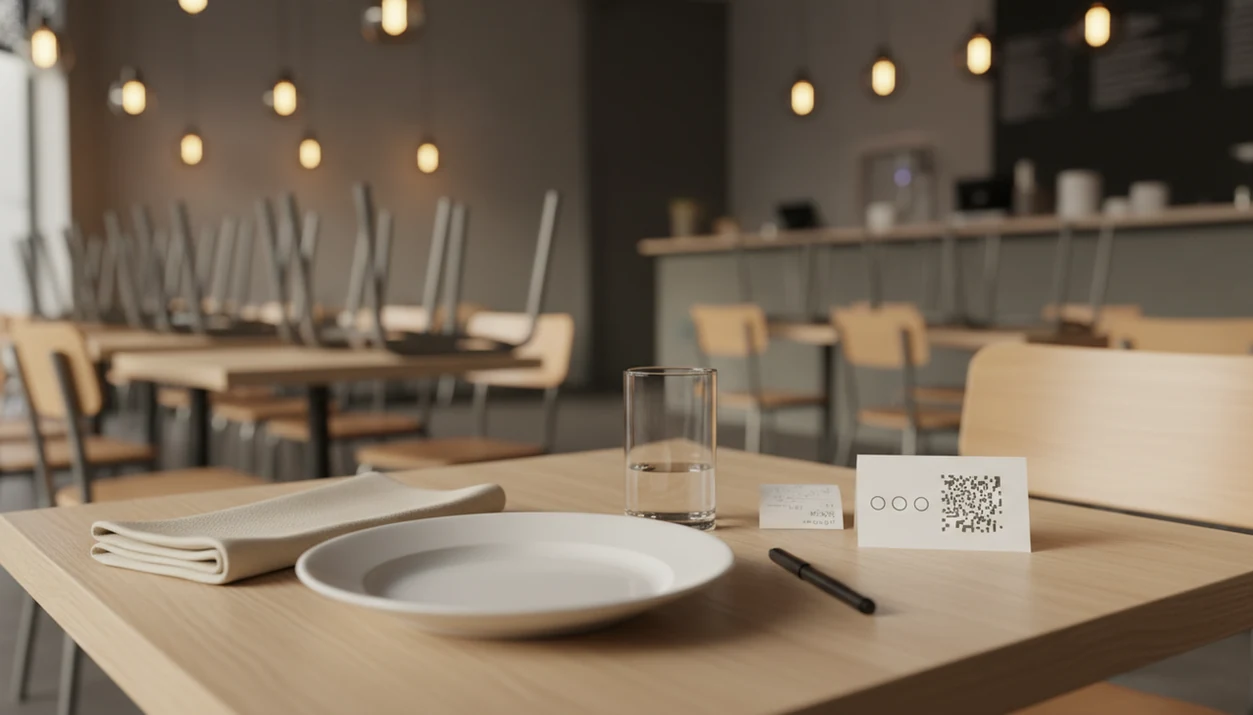
Use this restaurant feedback survey template to ask guests about food quality, service speed, staff friendliness, cleanliness, value, and whether they would return. Keep it short, send it right after the visit, and route low scores to a manager for follow-up.
> A restaurant feedback survey template is a ready-made set of guest satisfaction survey questions restaurants use after a visit to understand what diners liked, what went wrong, and what should improve.
- Ask 5-10 questions that guests can finish in under 3 minutes.
- Cover food, speed, friendliness, cleanliness, value, return intent, and one open comment box.
- Send the survey immediately after the meal by QR code, receipt link, SMS, email, tablet, or kiosk.
Restaurant Feedback Survey Template At A Glance
A useful restaurant feedback survey template is short, visit-specific, and easy to answer before the guest forgets the details. Aim for 5-10 questions, with rating questions, return intent, recommendation intent, and one open comment box.
Use channels that match the visit. A QR code works at the table, a receipt link fits takeaway, and SMS or email works after online ordering. Tablets and kiosks can help when staff already guide guests through checkout.
The manager scanning comments after closing needs more than stars. Low ratings should trigger a review, a tag, or a direct follow-up if the guest gave permission. For related formats beyond restaurants, our customer feedback survey templates page covers other small-business examples.
5 Facts About Restaurant Survey Questions That Get Answers
- Good restaurant survey questions cover food quality, service, speed, cleanliness, ambiance, and value for money.
- Keep the survey short: SurveyMonkey’s survey-design guidance recommends reducing question count and completion time to limit drop-off (https://www.surveymonkey.com/mp/survey-guidelines/). For this restaurant template, use 5-10 questions and aim for under 3 minutes.
- A common guest satisfaction survey format is three or four closed questions plus one open comment question.
- Immediate post-visit feedback captures fresher impressions than a survey sent several days later.
- Survey results only matter when someone reviews comments, assigns follow-up, and fixes repeat problems.
Short wins.
A guest may say “everything was fine” at the host stand, then give a 6 out of 10 later because the fries arrived cold. That gap is why the open comment matters. Ratings show the pattern; comments explain the moment.
Copy-Ready Restaurant Feedback Survey Template
What restaurant feedback survey questions should you use today? Use these questions as a copy-ready guest satisfaction survey, then remove any item that does not match your service style.
Core rating questions
- Overall, how satisfied were you with your visit? `1-5 rating`
- How would you rate the food quality? `1-5 rating`
- How would you rate the speed of service? `1-5 rating`
- How friendly and helpful was our staff? `1-5 rating`
- How clean was the dining area, restroom, or pickup area? `1-5 rating`
- How fair was the value for the price paid? `1-5 rating`
- Are you likely to return? `Yes / No / Not sure`
- How likely are you to recommend us to a friend? `0-10 rating`
Open comment and follow-up questions
- What is one thing we could improve before your next visit? `Open text`
- May a manager contact you about your feedback? `Yes / No, with optional name and phone or email`
Keep the wording plain. Guests answer faster when the form sounds like a server asking a clear question, not a research department.
Before You Start: Decide The Goal And Response Owner
Before you launch the restaurant feedback survey, decide what the answers are supposed to improve and who will act on them. A short form still creates work, especially when a guest leaves a low score or asks for a callback.
- Choose one main goal for the first version, such as faster service, better food consistency, cleaner pickup areas, stronger value perception, or more repeat visits. One goal keeps the question list tight.
- Assign a daily reviewer before responses arrive. This might be the general manager, shift lead, owner, or guest relations person who can read comments after each rush.
- Name the callback owner for guests who give permission to be contacted. Do not let phone numbers or emails sit in the spreadsheet without a next step.
- Confirm which channels you can actually use, such as QR code, receipt link, SMS, email, tablet, or kiosk, and only send messages where the guest has allowed that contact.
- Set the low-score trigger in advance, then prepare simple tags for food, service, cleanliness, value, and wait time so patterns are easy to spot.
How A Guest Satisfaction Survey Works After A Meal
A guest satisfaction survey works by turning a recent dining experience into structured response data. The guest scans a QR code, opens an SMS or email, taps a tablet or kiosk, or follows a receipt link printed below the total.
The system stores closed-ended ratings as fields such as CSAT, return intent, or recommendation intent. Open comments become text records that explain why a score moved. Timing matters because meal-specific memory fades quickly, especially for speed, temperature, and cleanliness details.
Customer Feedback Surveys can collect post-purchase surveys, NPS scores, and review follow-ups for small restaurants. The useful feature is not just the form builder; it is the alert queue that puts a cold-food complaint, 1-star cleanliness score, or angry billing comment in front of the manager before the next rush. Low-score alerts can lead to manager review, staff coaching, menu checks, or service recovery.
How To Use This Restaurant Feedback Survey Template
Use the template as a small operating habit, not a one-time form. The weekly spreadsheet tab should show NPS scores, customer quotes, and one assigned follow-up, not just a growing comment pile.
- Set one survey goal, such as improving service speed, food consistency, or repeat visits.
- Choose 5-10 questions from the template and keep the wording specific.
- Publish the survey by QR code, receipt link, SMS, email, tablet, or kiosk.
- Review responses daily for active complaints, then weekly for patterns.
- Route low ratings to a manager for follow-up when the guest allows contact.
- Track recurring issues over time, including slow service, cold food, dirty tables, or value concerns.
For restaurants comparing software instead of a printable form, our best restaurant feedback survey app guide explains app-based options.
Best Timing And Channels For Restaurant Guest Feedback
Ask for restaurant guest feedback immediately after the meal when the guest still remembers the table, server, and food. Dine-in, takeaway, and delivery may need different channels, and late surveys often lose service-specific detail.
Qualtrics describes customer satisfaction surveys as most useful when they are tied to a specific interaction, which supports asking while the visit is still fresh rather than days later (https://www.qualtrics.com/experience-management/customer/customer-satisfaction-surveys/).
| Channel | Works well for | Watch for |
|---|---|---|
| QR code on table | Dine-in guests before they leave | Guests may skip it during a busy meal |
| Receipt link | Takeaway and counter service | The link must be easy to spot |
| SMS | Online orders and loyalty guests | Use only where consent and workflow allow |
| Reservations and delivery follow-up | Slower response window | |
| Kiosk | Quick-service exits | Can feel rushed |
| Tablet | Hosted checkout or events | Staff must introduce it neutrally |
For SMS surveys, add a consent check before sending; the FCC’s TCPA guidance treats many automated calls and texts as consent-sensitive communications (https://www.fcc.gov/general/telemarketing-and-robocalls).
Incentives can lift response volume, but they may bias answers toward reward-seekers. Ask at the right moment first.
Evidence Behind This Restaurant Feedback Survey Template
This template follows common survey-design and customer-experience guidance: keep the form short, ask about the specific visit, and combine ratings with one comment box. The evidence supports the structure; the exact questions still need restaurant judgment.
Shorter forms reduce friction and usually lose fewer guests before completion, which is why this template stays near 5-10 questions instead of turning dinner feedback into a long research study. Interaction-specific CSAT questions are also a better fit than broad brand questions when the goal is to understand tonight’s table, pickup order, or delivery.
- Use closed ratings to measure patterns across visits, such as slower service on Fridays or lower value scores after a price change.
- Add one open comment so guests can explain the reason behind the score in their own words.
- Send the survey while the meal is still fresh, especially for timing, temperature, cleanliness, and staff tone.
- Treat incentives carefully because they can increase response volume while attracting guests who mainly want the reward.
- Separate the evidence-backed basics from operating judgment: the research supports short, timely, neutral surveys, but managers decide which scores trigger coaching, refunds, menu checks, or staffing changes.
Low-Score Alerts And Restaurant Follow-Up Actions
Low-score alerts turn negative feedback into a task. Set thresholds such as 1-2 stars, “unlikely to return,” poor cleanliness, or a comment mentioning unsafe food, rude staff, or an unresolved bill issue.
| Guest signal | Follow-up action |
|---|---|
| 1-2 star overall score | Manager review and possible callback |
| Cold food or wrong item | Menu station check and refund review |
| Slow service | Staffing adjustment or shift timing review |
| Rude staff comment | Coaching conversation with shift lead |
| Dirty table or restroom | Cleaning checklist review |
| Unlikely to return | Service recovery message if contact is allowed |
Tag recurring themes, then look for clusters by daypart, menu item, or location. A one-star public review is harder to recover than a private comment the team can still answer. Apps such as Customer Feedback Surveys can help route low scores, but someone still needs to own the follow-up.
Common Restaurant Survey Questions Mistakes
The most common mistake is asking too much. A 24-question form after a quick lunch will lose guests before the open comment box.
Avoid using only a star rating. You will know the visit went badly, but not whether the issue was wait time, food temperature, value, or staff tone. Also avoid “How was everything?” as the only question. It sounds friendly in person, but it is too vague for reporting.
Don’t write leading questions that pressure guests to be positive, such as “How great was your service today?” Keep the language neutral. Finally, do not collect comments without assigning review ownership. Restaurants that also sell online can compare post-delivery feedback in our guide to customer feedback surveys for ecommerce.
Limitations
A restaurant feedback survey can show what guests felt, but it cannot prove the full operational cause of a problem. Treat the answers as signals for review, not as a complete diagnosis.
- A survey captures guest opinions, not every kitchen, staffing, or supply issue behind the experience.
- Short surveys improve completion, but they may miss deeper context.
- Open-ended comments can be inconsistent without a tagging and review workflow.
- Feedback from only very happy or very unhappy guests can skew the picture.
- Incentives may increase responses, but they can bias who answers.
- Survey results collected days later may be less accurate for service speed and cleanliness.
- A template will not improve the restaurant unless owners and managers act on the answers.
The work starts after the form is submitted. A customer feedback dashboard can help track themes, but the fix still happens on the floor.
FAQ
What is a restaurant feedback survey?
A restaurant feedback survey is a post-visit form that collects guest opinions about food, service, speed, cleanliness, value, and the overall dining experience.
How many questions should restaurants ask?
Restaurants should usually ask 5-10 questions, or use a few closed questions plus one open comment box. Shorter surveys are easier for guests to finish.
When should restaurants send surveys?
Restaurants should usually send surveys immediately after the meal or visit. Fresh timing helps guests remember service, food, and cleanliness details.
What questions should restaurants ask?
Restaurants should ask about food quality, service friendliness, speed, cleanliness, value, return intent, recommendation intent, and one improvement comment.
Are QR code surveys effective?
QR code surveys work well for dine-in tables, receipts, takeaway bags, and counter-service pickup areas. They are most useful when the code is visible and the survey is short.
Should restaurant surveys be anonymous?
Anonymous responses can be more candid, but named responses make follow-up possible. Many restaurants allow anonymous comments while asking optional contact permission.
How should restaurants handle low scores?
Restaurants should route low ratings to a manager for review, service recovery, and operational fixes. Customer Feedback Surveys can support low-score alerts when restaurants want an app-based workflow.
Should restaurants offer survey incentives?
Incentives may increase survey responses, but they can bias the feedback sample. If used, the offer should not pressure guests to leave positive answers.