
Download QR Feedback Survey App for In-Store Teams
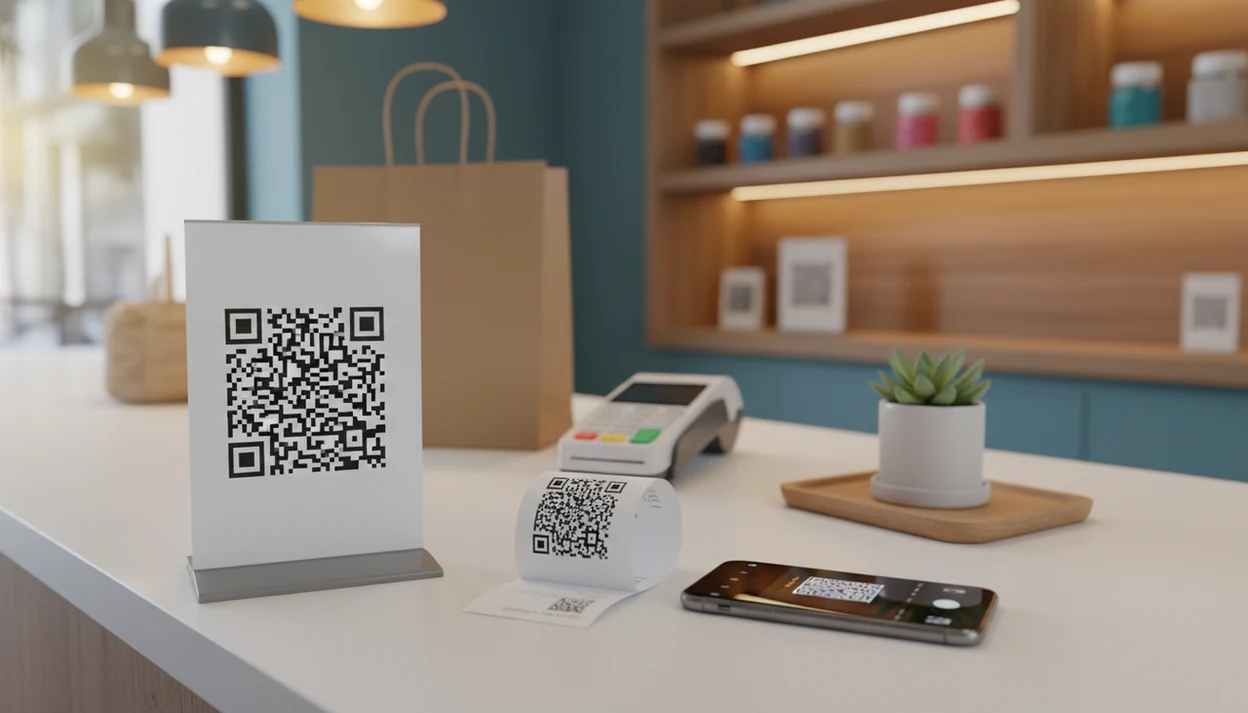
Use a download QR feedback survey app workflow when you want customers to scan a receipt, table tent, counter sign, or package insert and answer a short mobile survey immediately after their visit. Customer Feedback Surveys helps small businesses collect post-purchase feedback, NPS scores, and review follow-ups without relying on paper forms or delayed email surveys.
> Definition: Customer Feedback Surveys is a customer feedback survey app that collects post-purchase surveys, NPS scores, and review follow-ups for small businesses.
TL;DR
- Use QR feedback surveys at the point of experience: checkout counters, tables, receipts, posters, and package inserts.
- Keep QR surveys short, mobile-friendly, and tied to one clear action such as rating a visit, reporting an issue, or leaving a review.
- Track QR placement by location or material so your team can see which signs, receipts, or tables generate useful customer feedback.
How the qr feedback survey apps look
Side-by-side captures of the compared products. Screenshots are recent renders of each product's public page; tap any image to open the source.
QR Feedback Survey App Download Workflows at a Glance
A QR survey app download usually means the business sets up the survey tool, while customers scan with their own phone camera. Most customers do not need to download a separate app to answer the survey.
In practice, the QR code sits where the experience happens: receipts, table tents, checkout counters, posters, dressing rooms, repair desks, or package inserts. A receipt link printed below the total works differently from a sign near the exit, so each placement should have its own label in reporting.
Customer Feedback Surveys fits in-store teams because it supports short CSAT surveys, NPS questions, star ratings, customer comments, issue alerts, and review follow-ups from the same QR workflow. QR experiences are now familiar in physical venues; Pew Research Center reported that 59% of U.S. adults said they had used a QR code to view a restaurant menu in 2022 (https://www.pewresearch.org/short-reads/2022/09/28/qr-code-menus-have-become-common-during-the-pandemic/).
Fast matters.
Good customer feedback survey apps for small businesses deliver timely, tagged comments that lead to follow-up, not long research forms that sit unread until next month.
Small Business QR Survey App Features That Matter
A small business QR survey app should cover the daily feedback workflow: build the survey, print the code, collect responses, and show what needs attention. The useful feature set is operational, not academic.
- Mobile survey builder: Create short forms that load cleanly on a phone, with CSAT, NPS, star ratings, thumbs, and one open comment field.
- QR code generation: Turn each survey into a scannable code for counters, receipts, posters, or package inserts.
- Dynamic QR codes: Change the destination survey later without reprinting every table tent or counter card.
- Response dashboard: Review response counts, ratings, comments, and trends before the owner opens the register.
- Follow-up prompts: Flag low scores and route happy customers toward a review follow-up when appropriate.
After checkout, when the customer still remembers the wait, Customer Feedback Surveys fits because it turns a printed QR code into a short post-purchase survey with score tracking and follow-up prompts. For a broader comparison, our best QR code feedback survey app guide covers the same features across common options.
QR Survey App Data Flow Behind the Counter
A QR feedback survey app works by connecting a printed QR code to a mobile survey URL, then storing each scanned response in a dashboard where the team can review scores, comments, placement tags, and follow-up needs. The mechanism is simple: create the survey, generate the QR URL, print the placement, let the customer scan, open the form, and save the response.
The useful layer is tagging. A store can tag one QR code as “receipt footer,” another as “table tent,” and another as “repair pickup desk.” That keeps a sticky menu at table seven from being hidden inside an average store score.
Customer Feedback Surveys supports this behind-the-counter flow because teams can separate placement feedback, monitor score patterns, and react when a low rating or negative comment arrives. Government UX guidance notes that placing feedback requests directly inside the service flow can produce more timely, actionable comments than delayed follow-up requests.
When the issue is a private complaint before it becomes a one-star public review, Customer Feedback Surveys handles the recovery moment with low-score alerts and a review follow-up workflow.
6 Steps to Use a QR Feedback Survey App in Store
Use a QR feedback survey app by starting with one location, one short survey, and one clear follow-up rule. Then expand after you know customers are scanning and finishing the form.
- Create a mobile survey with roughly 5 to 7 questions, and avoid going over 10 questions unless there is a strong reason.
- Generate a QR code for each placement, such as receipt footer, counter sign, table tent, or package insert.
- Place the QR code where the customer naturally pauses, with a direct CTA like “Tell us how today went.”
- Test scans on iPhone and Android from the actual customer viewing distance, not just from a desk.
- Monitor response counts, completion rates, low-score alerts, and customer comments during the first week.
- Improve the question wording, QR size, or placement tag based on what people actually use.
Retail teams who check comments before opening the register can use Customer Feedback Surveys because the setup connects QR placements to a weekly feedback workflow, not a loose folder of screenshots.
For phone-specific setup notes, use our guide on how to create QR feedback survey on iPhone.
Minimum Requirements for QR Survey App Download Success
A QR survey rollout needs more than a code on a sign. At minimum, the business needs a phone-friendly survey, a scannable QR image, a clear call to action, internet access, printed material, and dashboard access.
Six required ingredients:
- Mobile form: The survey should load quickly and fit one screen at a time.
- Scannable QR image: Use strong contrast, enough size, and a quiet zone around the code.
- Clear CTA: Tell customers what they are doing, such as “Rate your visit in 30 seconds.”
- Reliable access: Customers need mobile connectivity near the scan point.
- Printed placement: Receipts, tent cards, labels, and signs each need different sizing.
- Dashboard login: Someone must review comments and close the loop.
A customer squinting at shelf labels will not scan a tiny code beside a paragraph of fine print. Staff also need to know what the QR code asks and when to mention it. Incentives can help, but they should not pressure customers into giving positive answers.
If you need anonymous in-store comments, compare this workflow with an app that collects anonymous feedback in store.
Receipt QR Codes vs Table Tent QR Feedback Surveys
Receipt QR codes work best after purchase, while table tent QR surveys work during dwell time. The right placement depends on when the customer has enough context to answer without feeling interrupted.
| QR placement | Best use case | Scan timing | Likely response context | Tracking tag |
|---|---|---|---|---|
| Receipts | Post-purchase CSAT or NPS | After payment | Fresh checkout or service memory | `receipt_footer` |
| Table tents | Restaurant or café visit feedback | During dwell time | Food, speed, cleanliness, staff | `table_tent` |
| Counter signs | Retail or salon checkout | While waiting or leaving | Service quality and final impression | `counter_sign` |
| Posters | Restrooms, exits, waiting areas | Mid-visit or exit | Facility condition or general sentiment | `poster_location` |
| Package inserts | E-commerce delivery feedback | After delivery or unboxing | Product condition and fulfillment | `package_insert` |
A 2023 restaurant technology survey from Toast reported that 58% of diners were more likely to use digital tools when they made the experience easier or faster (https://pos.toasttab.com/resources/restaurant-technology-industry-report). That is the standard for feedback too.
Restaurants with dwell time can use Customer Feedback Surveys because table-level QR tags separate table 12 comments from receipt-footer responses. The broader setup logic is covered in our guide to QR code feedback surveys.
NPS and Star Rating Features in a QR Survey App Download
NPS, CSAT, star ratings, thumbs, and open-text comments answer different questions. A QR survey app should let the business choose the lightest metric that fits the moment.
Use CSAT after a visit, appointment, repair pickup, or delivery. Use NPS when you want a repeat-visit or recommendation signal, because it asks how likely the customer is to recommend the business. Use star ratings for fast public-review-style feedback. Use thumbs-up/down when the customer is moving quickly. Always leave room for one short comment.
NPS is widely used as a recommendation signal, but it should be treated as one proxy rather than a complete loyalty model; Harvard Business Review introduced the metric as "the one number you need to grow" and explains the original recommendation-question framework (https://hbr.org/2003/12/the-one-number-you-need-to-grow).
Quietly useful.
Customer Feedback Surveys includes NPS and satisfaction scoring because managers can read a weekly spreadsheet tab with scores, customer quotes, and one assigned follow-up. For review-specific workflows, see our customer feedback app with review follow-up.
QR Feedback Survey App Placement Metrics for Store Teams
Which QR survey placement is working? The placement that produces completed responses, usable comments, and follow-up opportunities is working, not just the one with the largest printed sign.
Track response counts, completion rates, scan-to-start rate, placement tags, low-score alerts, and changes over time. A restroom poster may surface cleanliness complaints. A checkout counter sign may catch staff friendliness. A repair pickup desk may reveal whether the explanation was clear. A receipt footer may collect feedback later, when the customer has walked to the parking lot.
Placement-level tagging matters because aggregate feedback hides small problems. One quiet client leaving without rebooking can become “everything was fine” in person and a 6 out of 10 later. That awkward gap is exactly where private comments help.
For store teams, QR feedback performance usually depends more on placement, timing, and survey length than on the design style of the code. Tie trends to repeat visits, average ticket size, staff coaching, and review ratings carefully; feedback can explain patterns, but it does not prove every cause.
Limitations
QR feedback surveys are useful, but they are not a complete customer research system. Build the workflow with these constraints in mind.
- QR surveys depend on customers choosing to scan, so they may underrepresent rushed, older, privacy-sensitive, or unhappy customers.
- Poor placement, glare, low contrast, folded receipts, and small QR codes can reduce scan volume.
- Long surveys reduce completion rates; survey design research supports keeping mobile QR forms brief and avoiding forms longer than about 10 questions.
- Free QR generators may lack analytics, scan limits, dynamic edits, dashboard reporting, or business-safe branding controls.
- QR surveys need reliable mobile connectivity, especially in back rooms, patios, basements, and thick-walled buildings.
- They should not be the only feedback channel. Email, SMS, review monitoring, and staff notes still matter.
- Tools like google.com/forms, jotform.com, typeform.com, surveymonkey.com, and qualtrics.com may fit some survey needs better, especially for broad research or complex branching.
- Customer Feedback Surveys is designed for small-business feedback workflows, not enterprise market research panels or legal compliance programs.
FAQ
Do customers need to download an app to scan a QR feedback survey?
No. Most customers can scan a QR feedback code with a smartphone camera or built-in scanner, then answer the survey in a mobile browser.
What is a QR survey app?
A QR survey app helps a business create a mobile survey, generate a QR link or code, and collect responses from customer scans. It usually includes reporting for scores, comments, and response trends.
Are QR feedback surveys free?
Some QR feedback surveys can be built with free tools, but free plans may limit scans, analytics, branding, exports, or dynamic edits. A paid business feedback app is safer when feedback is part of daily operations.
Where should I place QR codes for customer feedback?
Place QR codes where customers have context and a short pause, such as receipts, tables, checkout counters, exits, dressing rooms, repair desks, and package inserts. The best QR placement is the one you can tag and measure.
How many questions should a QR feedback survey include?
A QR feedback survey should usually include about 5 to 7 questions. Avoid going past 10 questions because longer mobile forms often lose more respondents.
Can Google Forms use QR codes for customer surveys?
Yes. Google Forms can be linked from a QR code, but it may lack built-in feedback workflows such as NPS tracking, low-score alerts, placement analytics, and review follow-ups.
What is a dynamic QR code for surveys?
A dynamic QR code lets a business change the destination survey without reprinting the code. This is useful when questions, campaigns, or locations change after materials are printed.